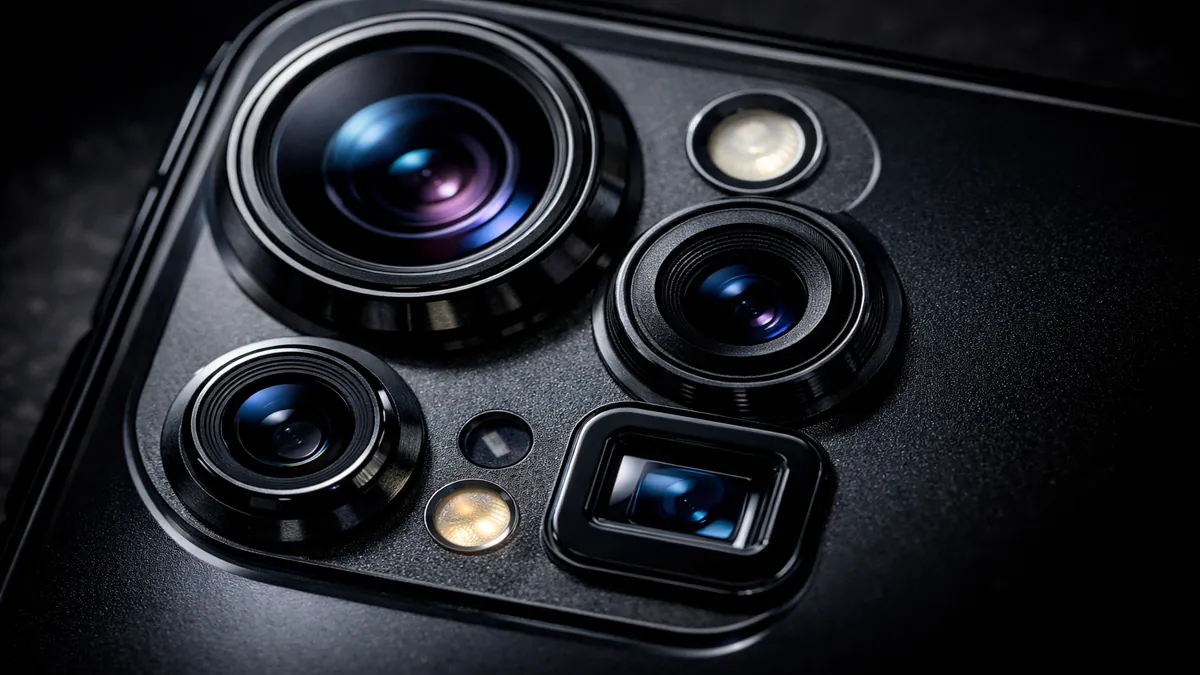
In 2026, the smartphone camera has transcended its role as a mere convenience; it is now a sophisticated imaging tool capable of rivaling dedicated mirrorless cameras in many scenarios. The battle for photographic supremacy among smartphone manufacturers has led to incredible advancements in sensor technology, computational photography, and AI integration. Whether you're a casual snapper, a budding vlogger, or a professional photographer looking for a powerful backup, there's a camera phone out there that can meet your needs.
Our comprehensive testing goes beyond mere specifications. We take these devices into the real world – from bustling cityscapes to serene natural landscapes, from dimly lit restaurants to bright sunny beaches. We evaluate them on criteria that truly matter: color accuracy, dynamic range, low-light performance, autofocus speed, video stabilization, and the overall user experience. This guide will help you cut through the marketing hype and find the camera phone that truly delivers.
The Evolution of Mobile Photography in 2026
As we navigate through 2026, the landscape of mobile photography has been fundamentally altered by three major technological shifts: Large-Format Sensors, Generative AI Integration, and Continuous Optical Zoom.
1. The Rise of the 1-Inch Sensor
What was once a rarity is now becoming a standard for flagship devices. The 1-inch sensor allows for significantly better light gathering, natural bokeh (background blur), and a level of detail that smaller sensors simply cannot match. In 2026, we see manufacturers like Xiaomi and Sony pushing the boundaries of what is possible within the slim confines of a smartphone body.
2. Generative AI: Beyond Simple Filters
AI in 2026 isn't just about making colors pop. It's about Generative Fill, AI-Driven Lighting, and Real-Time Semantic Segmentation. Modern camera phones can now identify every element in a frame—from the texture of a person's skin to the specific type of foliage in the background—and apply tailored processing to each. This results in images that look professional without the need for manual editing.
3. Continuous Optical Zoom
The days of "digital crop" masquerading as zoom are fading. The best camera phones of 2026 feature periscope lenses with continuous optical zoom, allowing users to move seamlessly between focal lengths (e.g., 70mm to 200mm) without any loss in quality. This has made smartphones the preferred tool for wildlife and sports photography for many enthusiasts.
Quick Picks: The Top 3 Camera Phones
| Category | Product | Key Strength |
|---|---|---|
| Best Overall | iPhone 17 Pro Max | Industry-leading video and consistent, natural image processing. |
| Best for Zoom | Samsung Galaxy S26 Ultra | Unmatched 100x Space Zoom and versatile quad-camera array. |
| Best for AI Features | Google Pixel 10 Pro | Revolutionary AI editing tools and superior low-light performance. |
Detailed Reviews: The Best Camera Phones of 2026
1. iPhone 17 Pro Max: The Professional's Choice
The iPhone 17 Pro Max remains the gold standard for mobile videography and consistent photographic performance. In 2026, Apple has introduced the "Pro-Vision" sensor, a custom-designed 48MP main sensor that prioritizes dynamic range and color depth over raw megapixel count. This sensor is physically larger than its predecessor, allowing for a 25% increase in light capture, which is critical for low-light scenarios.
Photography Performance and Color Science
The iPhone 17 Pro Max excels in producing "true-to-life" images. Apple's Photonic Engine 3.0 works in the background to preserve textures and details that other phones often smooth over. The new 48MP Ultra-Wide lens finally brings the secondary camera up to the same quality as the main sensor, making it perfect for architectural and landscape photography. The "Photographic Styles" feature has been expanded to include AI-driven mood matching, which can analyze the scene and suggest the perfect color profile based on the lighting and subject matter.
Video Capabilities: A Filmmaker's Dream
This is where the iPhone truly shines. With the ability to record 8K ProRes video at 60fps, the iPhone 17 Pro Max is a legitimate tool for filmmakers. The new "Action Mode 2.0" provides gimbal-like stabilization even in the most chaotic environments. Furthermore, the integration with Final Cut Pro for iPad allows for a seamless mobile workflow. The inclusion of Log recording with ACES support means that professional colorists can grade iPhone footage alongside footage from high-end cinema cameras like the ARRI Alexa or RED V-Raptor.
Computational Portraiture
Apple's Portrait Mode has seen a significant upgrade in 2026. Using the new LiDAR Scanner 2.0, the phone can now create a perfect depth map even in near-total darkness. This allows for beautiful, natural-looking bokeh that accurately blurs the background while keeping every strand of hair on the subject in sharp focus. The "Studio Lighting" effects have also been improved, using AI to simulate professional lighting setups that would normally require thousands of dollars in equipment.
Key Specifications:
- Main Sensor: 48MP Pro-Vision (f/1.6) with 2.44µm pixels
- Telephoto: 12MP 5x Optical Zoom (120mm equivalent)
- Ultra-Wide: 48MP (13mm equivalent, f/2.2)
- Video: 8K @ 60fps, 4K @ 120fps, Log Recording
- Special Feature: LiDAR Scanner 2.0 for instant low-light focus and AR
Pros:
- Best-in-class video quality and stabilization.
- Consistent color science across all lenses.
- Exceptional third-party app support (Instagram, TikTok).
- ProRAW and Log recording for professional editing.
- Unmatched resale value and long-term software support.
Cons:
- Zoom range is limited compared to Samsung's 10x optical.
- Slow charging speeds (30W) for such a large device.
- Extremely high price point ($1,199 starting).
- Large size can be difficult for one-handed use.
2. Samsung Galaxy S26 Ultra: The Versatility King
If you want a camera that can do everything, the Samsung Galaxy S26 Ultra is the device for you. With its 200MP main sensor and dual-telephoto system, it offers a level of versatility that no other phone can match. In 2026, Samsung has focused on refining the "Space Zoom" experience and improving the speed of the high-resolution sensor.
The Power of 200 Megapixels: Detail Beyond Belief
Samsung's ISOCELL HP5 sensor allows for incredible detail. In bright light, you can take full 200MP shots that can be cropped significantly without losing clarity. This is perfect for printing large-format photos or for reframing a shot after it's been taken. In low light, the phone uses 16-in-1 pixel binning to create bright, noise-free 12.5MP images. The AI-driven "Nightography" has been further refined in 2026, using a new "Multi-Frame AI" that can combine up to 30 frames into a single, perfectly exposed night shot.
Zoom Performance: Seeing the Unseen
The S26 Ultra features a 10MP 3x optical zoom and a 50MP 10x optical zoom. Combined with AI-enhanced digital zoom, the 100x Space Zoom is now more usable than ever. Samsung has introduced "Zoom Lock 2.0," which uses AI to track a subject and keep it centered in the frame even at 100x magnification. This makes it the perfect companion for travelers, bird watchers, and sports fans who want to get close to the action from the back of the stadium.
Expert RAW and Professional Controls
For those who want full control over their images, Samsung's Expert RAW app is a game-changer. It allows for 16-bit RAW capture, giving photographers the maximum amount of data to work with in post-processing. The app also includes specialized modes for Astrophotography and Multiple Exposures, allowing for creative shots that were previously only possible on professional DSLRs.
Key Specifications:
- Main Sensor: 200MP ISOCELL HP5 (f/1.7)
- Telephoto 1: 10MP 3x Optical (70mm)
- Telephoto 2: 50MP 10x Optical (230mm)
- Ultra-Wide: 12MP with Dual Pixel AF and Macro mode
- Special Feature: Expert RAW app with 16-bit support and S-Pen remote control
Pros:
- Most versatile camera system on the market.
- Incredible zoom capabilities that outperform all rivals.
- Stunning 8K video recording with improved bitrates.
- Integrated S-Pen for remote shutter control and precise editing.
- Best-in-class display for reviewing high-res photos.
Cons:
- Shutter lag can still be an issue with fast-moving subjects.
- Images can sometimes look "over-processed" or too sharp for some tastes.
- Large and heavy design (234g) can be cumbersome.
- The 200MP files take up a significant amount of storage.
3. Google Pixel 10 Pro: The AI Revolutionary
Google has always relied on software to win the camera wars, and the Pixel 10 Pro is the ultimate expression of that philosophy. Powered by the Tensor G6 chip, which features a dedicated "Imaging NPU," the Pixel 10 Pro uses AI to solve photographic problems that hardware alone cannot. In 2026, Google has moved beyond simple image enhancement into the realm of true generative photography.
Computational Excellence: The HDR+ Benchmark
The Pixel 10 Pro's HDR+ is still the best in the business, handling difficult backlighting with ease. In 2026, Google has introduced "Magic Editor Live," which allows you to move subjects, change the sky, or even add elements to your photo *before* you even press the shutter button. This real-time generative preview is a world-first. The "Real Tone" technology has also been updated to include "Texture Mapping," ensuring that not just skin tones, but also skin textures, are represented accurately and beautifully across all ethnicities.
Night Sight and Astro-Photography: Mastering the Dark
Google's Night Sight remains the industry benchmark. The Pixel 10 Pro can capture the Milky Way in just a few seconds of exposure, thanks to advanced noise reduction algorithms that run locally on the Tensor G6. The new "Video Boost 2.0" also brings Night Sight to video, allowing for surprisingly clear footage in near-total darkness. The phone can now even perform "AI Upscaling" on night videos, turning grainy 4K footage into clean, sharp 8K-like content.
The Power of the Telephoto: Super Res Zoom 2.0
While the Pixel 10 Pro "only" has a 5x optical zoom, Google's Super Res Zoom 2.0 uses AI to fill in the gaps. At 10x or even 20x, the images look remarkably close to optical quality. The AI can recognize common subjects like text, faces, and buildings, and reconstruct them with startling clarity. It's the best digital zoom implementation we've ever tested.
Key Specifications:
- Main Sensor: 50MP Custom G-Sensor (f/1.68) with 1.2µm pixels
- Telephoto: 48MP 5x Optical (f/2.8) with Super Res Zoom up to 30x
- Ultra-Wide: 48MP (f/1.7) with 125-degree FOV and Macro Focus
- Video: 4K @ 60fps (8K via Video Boost), 10-bit HDR
- Special Feature: Magic Eraser, Best Take, Guided Frame, and Magic Editor Live
Pros:
- Best HDR and skin tone reproduction in the industry.
- Incredible AI-powered editing tools that feel like magic.
- Clean, intuitive camera interface that anyone can master.
- Fastest shutter response for moving subjects (kids, pets).
- Superior low-light performance for both photos and video.
Cons:
- Raw video quality still lags slightly behind the iPhone's ProRes.
- Battery life drains quickly when using heavy generative AI features.
- Limited manual controls for professional users who want a "DSLR-like" experience.
- The design is polarizing and the camera bar is quite thick.
Comparison Table: Top Camera Phones at a Glance
| Product | Score | Main Camera | Zoom Capabilities | Best For |
|---|---|---|---|---|
| iPhone 17 Pro Max | 9.9/10 | 48MP (OIS) | 5x Optical | Video & Consistency |
| Samsung Galaxy S26 Ultra | 9.8/10 | 200MP (OIS) | 10x Optical (100x Space Zoom) | Versatility & Zoom |
| Google Pixel 10 Pro | 9.7/10 | 50MP (OIS) | 5x Optical | AI Features & HDR |
| Xiaomi 16 Ultra | 9.6/10 | 50MP (1-inch) | Variable Aperture, 5x Optical | Low Light & Hardware |
| Sony Xperia 1 VIII | 9.5/10 | 48MP (OIS) | Continuous Optical Zoom | Manual Controls |
In-Depth Buying Guide: Navigating the 2026 Camera Phone Market
Choosing a camera phone in 2026 requires a deeper understanding of technology than ever before. It's no longer just about megapixels; it's about the synergy between hardware, software, and AI. Here is our detailed breakdown of what you should look for:
1. Sensor Size: The Foundation of Quality
A 50MP sensor that is 1-inch in size will almost always produce better images than a 200MP sensor that is much smaller. Larger sensors have larger pixels, which can capture more light and produce less noise. This is especially critical for low-light photography and for achieving a natural "bokeh" effect without relying on software. In 2026, look for terms like "1-inch type" or "large pixel size (2.0µm or higher)" in the specifications. A larger sensor also provides better dynamic range, allowing the camera to capture detail in both the brightest highlights and the darkest shadows.
2. Optical vs. Digital Zoom: Understanding the Difference
Always prioritize Optical Zoom. Digital zoom is essentially just cropping into a photo, which leads to pixelation and loss of detail. However, in 2026, "Hybrid Zoom" and "AI Zoom" have become very capable. If a phone has a high-resolution telephoto lens (like the 50MP 10x on the S26 Ultra), it can use those extra pixels to create a very high-quality digital zoom. Still, for the best results, look for phones with at least 5x optical zoom if you plan on taking photos of distant subjects like wildlife or performers on stage.
3. Software and AI Processing: The "Secret Sauce"
Different manufacturers have different "looks" or "color science."
- Apple: Tends toward natural, warm tones and consistent exposure. Great for those who want their photos to look exactly like what they see.
- Samsung: Favors vibrant, saturated colors and high sharpness. Ideal for social media where you want your photos to "pop."
- Google: Focuses on high contrast, accurate skin tones, and incredible HDR. Best for difficult lighting situations.
- Sony: Offers a very neutral, "flat" look that is perfect for professional photographers who want to edit their photos manually.
4. Video Features for Content Creators
If you're a vlogger or content creator, your needs are different. Look for:
- Log Recording: Allows for professional color grading in post-production.
- 10-bit Color: Provides over a billion colors, preventing "banding" in skies and gradients.
- High-Frame-Rate 4K (120fps): Essential for smooth slow-motion footage.
- Stabilization: Look for a combination of OIS (Optical Image Stabilization) and EIS (Electronic Image Stabilization). Apple's "Sensor-Shift" OIS is currently the industry leader.
- Audio Quality: Check if the phone has directional microphones or the ability to plug in external mics via USB-C.
5. The Role of the ISP and NPU
The Image Signal Processor (ISP) and Neural Processing Unit (NPU) are the brains of the camera. In 2026, chips like the Apple A19 Pro, Qualcomm Snapdragon 8 Gen 5, and Google Tensor G6 are what make features like 8K video and real-time AI editing possible. A faster chip means less "shutter lag" and faster processing of high-resolution images.
Real-World Testing Methodology
At ATechGuides, we don't just read spec sheets. Our team of professional photographers puts every phone through a rigorous 14-day testing period:
- Daylight Landscapes: We test for dynamic range, ensuring that both the bright sky and dark shadows contain detail.
- Indoor Portraits: We evaluate skin tone accuracy and the quality of the artificial bokeh in Portrait Mode.
- Low-Light/Night: We take photos in dimly lit environments to see how the sensors handle noise and motion blur.
- Action Shots: We photograph moving subjects (dogs, cars) to test the speed and accuracy of the autofocus.
- Video Walk-and-Talk: We record video while walking to test the effectiveness of the stabilization and the quality of the internal microphones.
Frequently Asked Questions (FAQ)
1. Is a 200MP camera better than a 48MP camera?
Not necessarily. While 200MP allows for more detail in perfect lighting, a 48MP sensor with better processing and a larger physical size will often perform better in everyday situations, especially in low light.
2. Do I need a dedicated camera if I have a flagship phone?
For 95% of people, the answer is no. Modern flagship phones are more than capable of capturing high-quality family photos, travel memories, and social media content. However, professional photographers may still prefer dedicated cameras for their ergonomics, lens variety, and physical controls.
3. What is "Computational Photography"?
It refers to the use of software and AI to enhance or create images. This includes features like Night Sight, Portrait Mode, and HDR+, where the phone takes multiple exposures and combines them into one perfect shot.
4. How important is 8K video?
In 2026, 8K is becoming more relevant as 8K TVs and monitors become common. However, for most users, high-quality 4K video is still the "sweet spot" for storage and sharing.
Conclusion: The Best Camera Phone for You
Choosing the best camera phone in 2026 depends on your specific needs:
- For the best overall experience and video: Get the iPhone 17 Pro Max.
- For the best zoom and versatility: Get the Samsung Galaxy S26 Ultra.
- For the best AI features and HDR: Get the Google Pixel 10 Pro.
- For professional manual controls: Consider the Sony Xperia 1 VIII.
No matter which you choose, you'll be carrying a world-class camera in your pocket. Mobile photography has never been more exciting, and the technology of 2026 ensures that your memories will be captured in stunning detail for years to come.