Proton Drive vs Google Drive vs OneDrive 2026: Privacy Winner?
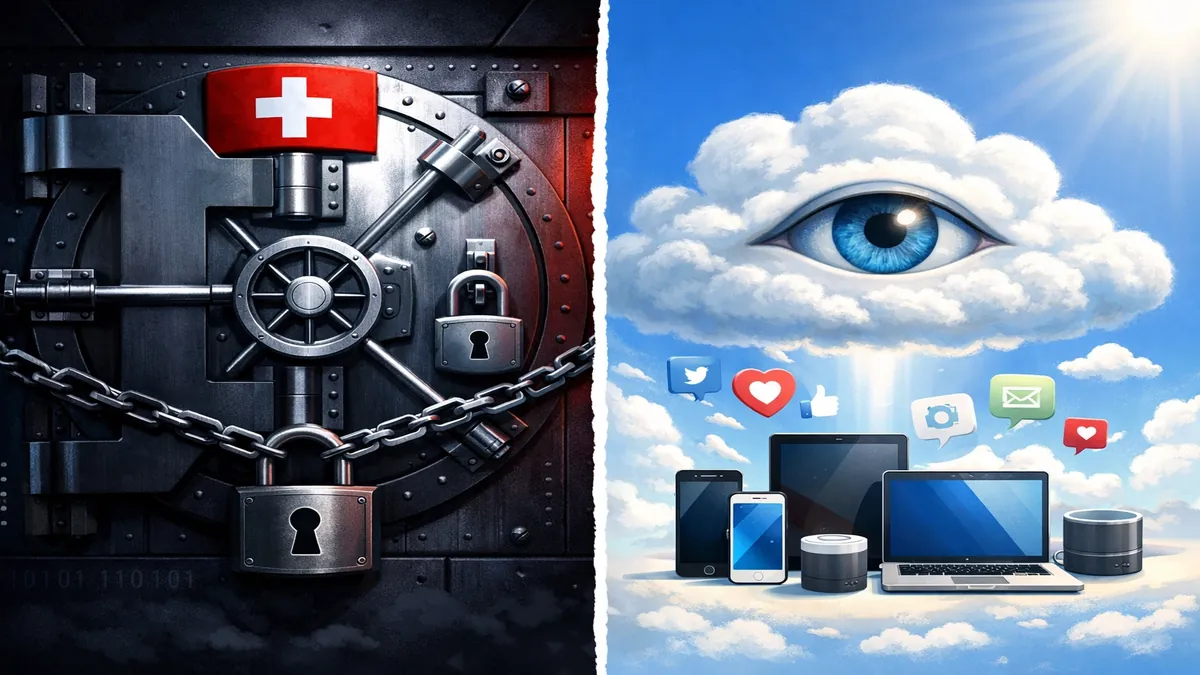
As we navigate through 2026, the concept of "cloud storage" has evolved from a simple online backup tool into the central nervous system of our digital lives. We store our most sensitive documents, family photos, and professional projects in the cloud, often without a second thought. However, the trade-off for the convenience of accessing files from any device is often our privacy. The three major players in the market—Proton Drive, Google Drive, and Microsoft OneDrive—offer vastly different levels of protection, and the "best" choice depends entirely on whether you prioritize seamless collaboration or absolute data sovereignty.
The fundamental difference lies in how these companies handle your data. While mainstream providers like Google and Microsoft encrypt your files "at rest" on their servers, they still hold the keys to that encryption. This means they can—and do—scan your files for various purposes, ranging from improving their AI models to complying with government warrants. Proton Drive, on the other hand, is built on a "zero-knowledge" architecture, ensuring that only you have the keys to your data. This guide will explore these differences in detail to help you decide which cloud is right for you in 2026.
Head-to-Head Comparison Table
| Feature | Proton Drive | Google Drive | Microsoft OneDrive |
|---|---|---|---|
| Encryption | End-to-End (E2EE) | Server-side | Server-side |
| Zero-Knowledge | Yes | No | No |
| Jurisdiction | Switzerland | USA | USA |
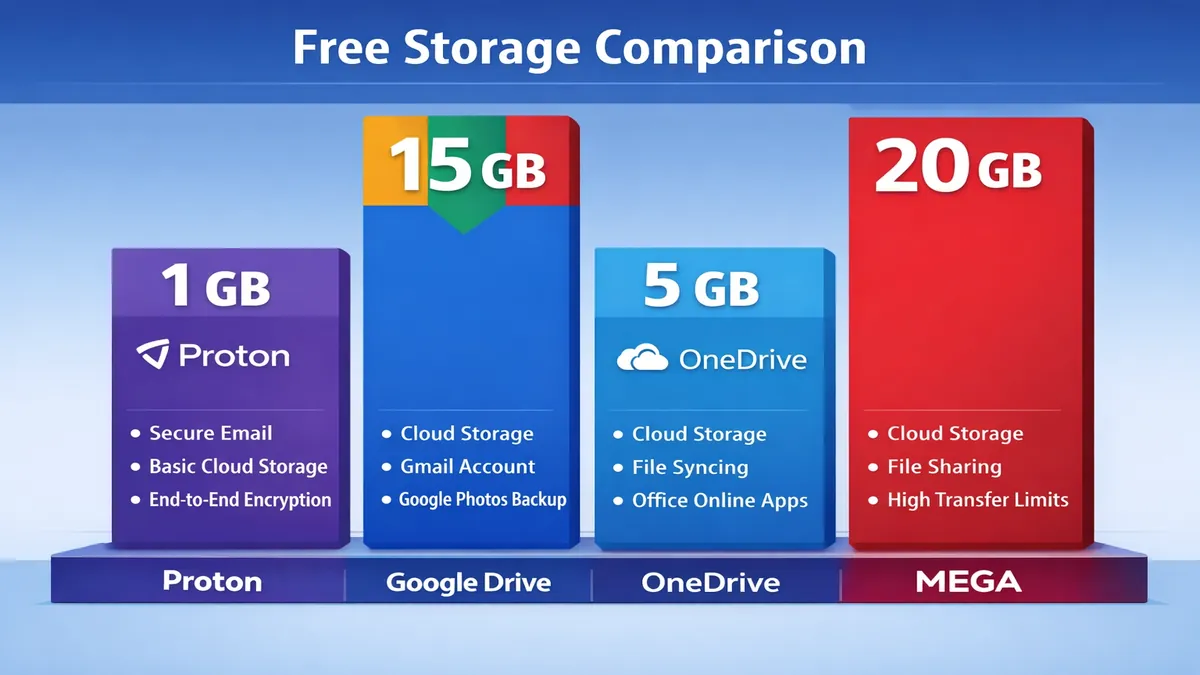
| Free Storage | 1 GB (up to 5 GB) | 15 GB | 5 GB |
| Collaboration | Basic (Proton Docs) | Industry-leading | Excellent (Office 365) |
| Open Source | Yes (Apps) | No | No |
| Best For | Privacy Purists | Collaboration & AI | Business & Value |
Proton Drive Deep Dive: The Privacy Fortress
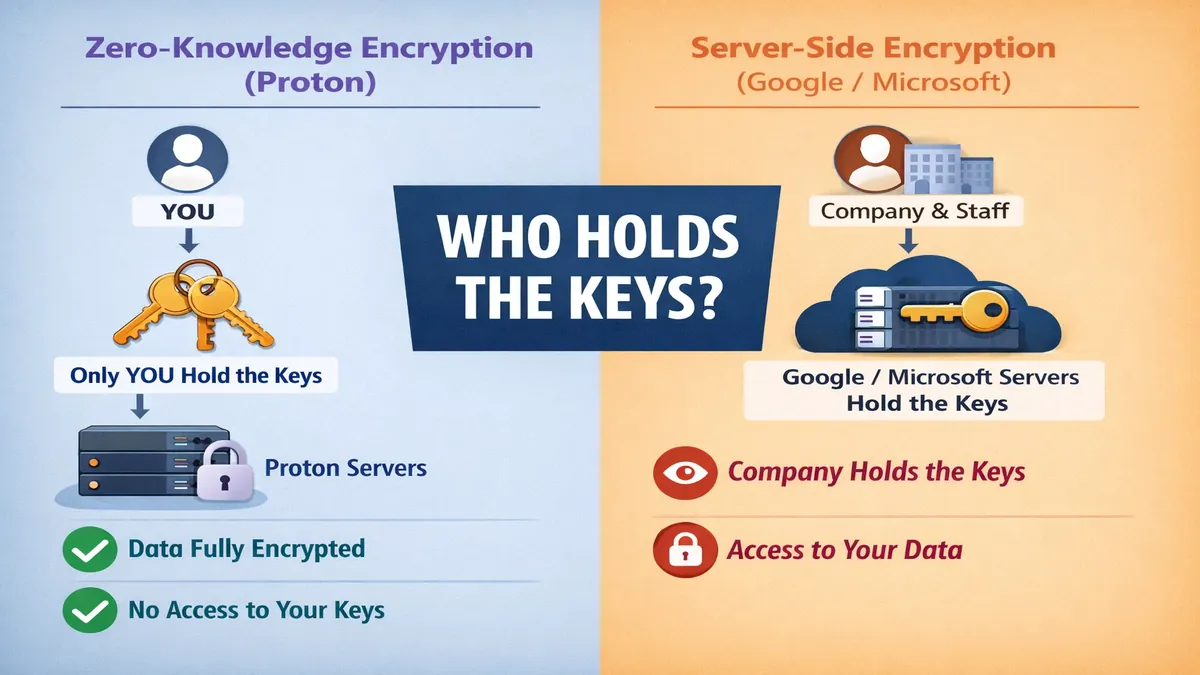
Proton Drive, based in Geneva, Switzerland, is the undisputed champion of privacy in 2026. Its primary selling point is End-to-End Encryption (E2EE) by default. While many cloud providers claim to be secure, Proton Drive takes it to a technical extreme. It encrypts not just the content of your files, but also the critical metadata—including file names, folder structures, file sizes, and even the dates when files were created or modified. Because the encryption keys are generated and stored on your device, and never shared with Proton, the company itself has no way of seeing what you are storing. This "zero-knowledge" architecture ensures that even if Proton's servers were seized or compromised, your data would remain a useless jumble of encrypted characters to anyone without your master password.
Operating under Swiss privacy laws, Proton Drive offers a level of legal protection that US-based companies simply cannot match. Switzerland is not a member of the "Five Eyes," "Nine Eyes," or "Fourteen Eyes" intelligence-sharing agreements. This means that your data is shielded from the broad, warrantless surveillance programs often associated with US jurisdictions under the Patriot Act or the CLOUD Act. In Switzerland, any request for user data must be approved by a Swiss court and must meet strict legal criteria under the Swiss Federal Act on Data Protection (FADP).
In 2026, Proton has also significantly expanded its ecosystem with the launch of Proton Docs. This is a privacy-focused alternative to Google Docs that allows for real-time, encrypted collaboration. Multiple users can edit a document simultaneously, with every keystroke being encrypted before it is sent to the server. While it currently lacks some of the advanced AI-driven formatting features of its rivals, it is a massive leap forward for journalists, activists, and legal professionals who need to work together on sensitive documents without sacrificing security. Furthermore, Proton Drive's mobile apps have been audited and are fully open-source, allowing the community to verify the security claims made by the company. For those who believe that privacy is a fundamental human right, Proton Drive is the gold standard.
Secure Your Files with Proton Drive: https://go.getproton.me/aff_c?offer_id=43&aff_id=16738
Google Drive: The King of Collaboration and AI
Google Drive remains the most popular and widely used cloud storage service in the world, and for good reason. Its integration with the broader Google Workspace ecosystem (Docs, Sheets, Slides, and Forms) is unparalleled, offering a seamless experience for real-time collaboration that still feels like the industry benchmark in 2026. Whether you are a student working on a group project or a multinational corporation managing complex workflows, Google Drive's ability to handle multiple simultaneous editors with zero lag is a feat of engineering.
In 2026, Google has doubled down on AI integration through its Gemini platform. Gemini can now "read" and understand the context of all the documents in your Drive. You can ask it to "summarize the key points from all the meeting notes in the Q1 folder" or "draft a project proposal based on the data in this spreadsheet," and it will do so in seconds. This level of productivity is addictive and, for many, indispensable.
However, this incredible convenience comes at a significant and often overlooked privacy cost. To provide these AI features, power its advanced search engine, and serve targeted advertisements across its other platforms, Google's systems must be able to index and analyze your files. This means your data is not private from the company itself. Furthermore, as a US-based corporation, Google is subject to the CLOUD Act and the Foreign Intelligence Surveillance Act (FISA). These laws allow the US government to compel Google to turn over user data stored on its servers, often with a gag order that prevents the company from even notifying the user. For the average user, the 15 GB of free storage and the sheer utility of the platform may outweigh these concerns, but for those handling sensitive intellectual property, legal documents, or personal medical records, the lack of true end-to-end encryption is a major structural vulnerability.
Microsoft OneDrive: The Business and Value Powerhouse
Microsoft OneDrive is the backbone of the modern corporate world and the default storage solution for the Windows 11 ecosystem. Its deep integration with the Microsoft 365 suite (formerly Office 365) makes it the most practical choice for millions of professionals and students. The value proposition of OneDrive is arguably the best in the industry: a standard Microsoft 365 Personal subscription, which costs roughly the same as a few cups of coffee per month, includes 1 TB of storage along with full, always-updated access to Word, Excel, PowerPoint, and Outlook.
From a productivity standpoint, OneDrive's "Files On-Demand" feature is a standout. it allows you to see and manage all your cloud files directly in Windows File Explorer without them taking up any space on your local hard drive until you actually need to open them. This is a lifesaver for users with limited laptop storage.
However, from a privacy perspective, OneDrive sits in a similar position to Google Drive. While Microsoft offers a "Personal Vault"—a dedicated folder that requires an extra layer of identity verification (like a fingerprint or a code sent via SMS) to open—the underlying storage is still not end-to-end encrypted by default. Microsoft holds the encryption keys to your data. Historically, Microsoft has been a participant in the PRISM program, and as a US-based company, it is subject to the same government data request mandates as Google. For businesses that require strict compliance with regulations like GDPR or HIPAA, Microsoft offers robust administrative and auditing controls, but these are designed to protect the organization from external threats and internal leaks, rather than protecting the individual user's privacy from Microsoft itself. For the "power user" who is already deeply embedded in the Windows and Office ecosystem, OneDrive is the most logical and cost-effective choice, provided they are comfortable with the mainstream privacy trade-offs.
Detailed Buying Guide: Choosing Your Cloud in 2026
When deciding where to store your digital life, consider these four critical pillars:
1. Encryption Type: E2EE vs. Server-Side
End-to-End Encryption (E2EE) means only you have the keys. Server-side encryption means the provider has the keys. If you are storing sensitive personal or professional data, E2EE (offered by Proton Drive) is the only way to guarantee true privacy.
2. Jurisdiction and Legal Protection
Where a company is headquartered matters. US-based companies (Google, Microsoft) are subject to broad surveillance laws. Swiss-based companies (Proton) operate under some of the world's strictest privacy protections.
3. Ecosystem Integration
Do you need your storage to "talk" to your email, your word processor, and your AI assistant? If so, Google Drive or OneDrive are the clear winners. If you prefer a "decoupled" approach where your storage is a standalone secure vault, Proton Drive is superior.
4. Cost per Terabyte
If you have a massive library of photos and videos, the cost of storage becomes a major factor. Microsoft OneDrive (via Microsoft 365) currently offers the lowest cost per terabyte for mainstream users.
The Verdict: Which Cloud Storage Wins in 2026?
The "winner" in 2026 depends entirely on your personal hierarchy of needs:
- The Privacy Choice: Proton Drive. Choose Proton Drive if you want to ensure that no government, hacker, or even the storage provider itself can ever see your files. It is the ultimate "digital safe" for your most important documents and the only choice for the privacy-conscious.
- The Productivity Choice: Google Drive. Choose Google Drive if you work in a fast-paced team environment and want to leverage the latest AI features to stay ahead. It is the best ecosystem for collaboration, provided you are comfortable with Google's data-driven business model.
- The Value Choice: Microsoft OneDrive. Choose Microsoft OneDrive if you are already a Windows user and need a large amount of storage for a low price. The 1 TB included with Microsoft 365 is the best deal on the market for families and small businesses.
Regardless of your choice, the most important step is to have a backup. Never store your only copy of a critical file in a single cloud location.
Upgrade to Proton Unlimited for Maximum Privacy: https://go.getproton.me/aff_c?offer_id=26&aff_id=16738&url_id=1198
Get Started with Proton Drive for Free: https://go.getproton.me/aff_c?offer_id=43&aff_id=16738
Frequently Asked Questions (FAQ)
Is Proton Drive slower than Google Drive?
Because Proton Drive must encrypt and decrypt your files on your device, you may notice a slight delay when uploading or downloading very large files compared to Google Drive. However, with modern processors and high-speed internet in 2026, this difference is negligible for most daily tasks.
Can I use Proton Drive for free?
Yes, Proton Drive offers a free tier that starts with 1 GB of storage. You can often increase this to 5 GB by completing simple tasks like downloading the mobile app or uploading your first file. For more storage, you will need a paid subscription.
Does Google Drive encrypt my files?
Yes, Google Drive encrypts your files while they are being transferred (in transit) and while they are stored on their servers (at rest). However, Google holds the encryption keys, meaning they can decrypt your files if required by law or for their own internal purposes.
What is the "Swiss Privacy" advantage?
Switzerland has some of the strongest privacy laws in the world. Under Swiss law, a company like Proton cannot be forced to start logging user data or to build backdoors into its encryption. Any request for data must be approved by a Swiss court and must meet strict legal criteria.
Upgrade to Proton Unlimited for Maximum Privacy: https://go.getproton.me/aff_c?offer_id=26&aff_id=16738&url_id=1198
Get Started with Proton Drive for Free: https://go.getproton.me/aff_c?offer_id=43&aff_id=16738
📚 Related Articles
* Affiliate link. We may earn a commission at no extra cost to you.
Also consider: Proton Unlimited (best value)
Disclosure: This article contains affiliate links. We may earn a commission if you purchase through our links, at no extra cost to you. See our affiliate disclosure.