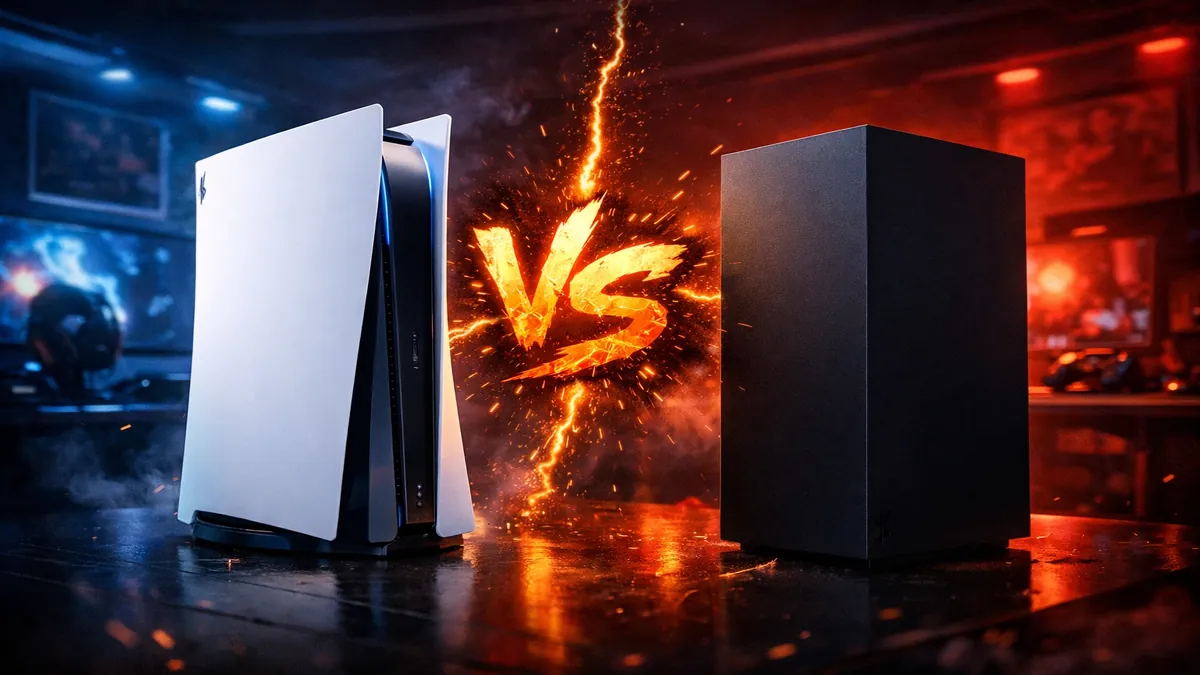
PS5 vs Xbox Series X 2026: Which Console Should You Buy?
Introduction
In 2026, the console wars between Sony's PlayStation 5 (PS5) and Microsoft's Xbox Series X continue to rage, albeit with both platforms having matured significantly since their initial launch. What began as a fierce competition for next-generation dominance has evolved into a more nuanced battle, where each console has carved out its distinct identity and appeal. For consumers, the decision of which console to buy is no longer just about raw power; it's about ecosystem, exclusive games, subscription services, and personal preferences. Both the PS5 and Xbox Series X offer breathtaking graphics, lightning-fast load times, and immersive gaming experiences, but they approach these elements from slightly different angles.
This comprehensive comparison aims to dissect the strengths and weaknesses of each console in 2026, providing a detailed analysis of their hardware, exclusive game libraries, subscription models (PlayStation Plus vs. Xbox Game Pass), and overall value proposition. We will delve into the nuances that differentiate these two gaming giants, helping prospective buyers make an informed decision based on their individual gaming habits and priorities. The core question remains: in 2026, with both consoles firmly established, which one truly offers the better gaming experience and is the right choice for you?
Hardware Comparison
While both the PS5 and Xbox Series X are formidable machines, boasting custom-designed AMD Zen 2 CPUs and RDNA 2 GPUs, there are subtle differences in their hardware architecture that contribute to their unique performance characteristics. These differences, though often debated in technical circles, translate into varying experiences for gamers.
CPU
Both consoles feature an 8-core, 16-thread AMD Zen 2 CPU. The PS5's CPU runs at a variable frequency up to 3.5 GHz, while the Xbox Series X's CPU runs at a slightly higher, fixed frequency of 3.8 GHz (3.66 GHz with SMT). In practice, this difference is often negligible, as game developers optimize their titles to leverage the strengths of each architecture. Both CPUs are more than capable of handling complex game logic, AI, and physics simulations, ensuring smooth gameplay even in the most demanding titles.
GPU
This is where a more significant theoretical difference lies. The Xbox Series X boasts a GPU with 12 teraflops of processing power, featuring 52 compute units running at 1.825 GHz. The PS5, on the other hand, has a GPU with 10.28 teraflops, comprising 36 compute units running at a variable frequency up to 2.23 GHz. On paper, the Xbox Series X has a raw power advantage. However, the PS5's GPU benefits from a more efficient architecture and a higher clock speed per compute unit, which can sometimes compensate for the lower teraflop count. Ultimately, both consoles are capable of rendering games in 4K resolution at up to 120 frames per second (fps), with support for advanced graphical features like ray tracing. The actual visual fidelity and performance often depend on the developer's optimization and the specific game engine used.
SSD Speed
One of the most transformative advancements in this generation of consoles is the inclusion of ultra-fast Solid State Drives (SSDs). The PS5's custom 825GB SSD boasts an impressive raw throughput of 5.5 GB/s, which can reach up to 9 GB/s with compression. The Xbox Series X features a 1TB custom NVMe SSD with a raw throughput of 2.4 GB/s, expanding to 4.8 GB/s with compression. While the Xbox Series X has a larger default storage capacity, the PS5's SSD is theoretically faster. This difference is most noticeable in game loading times, where the PS5 often exhibits slightly quicker transitions between levels and menus. Both consoles utilize their SSDs not just for faster loading but also for innovative game design, allowing for seamless world streaming and dynamic asset loading that was previously impossible with traditional Hard Disk Drives (HDDs).
Memory
Both consoles are equipped with 16GB of GDDR6 RAM. The PS5's memory interface is slightly different, with 10GB at 448 GB/s and 6GB at 224 GB/s, optimized for game assets. The Xbox Series X has 10GB at 560 GB/s and 6GB at 336 GB/s. In practice, both memory configurations provide ample bandwidth for high-resolution textures, complex game worlds, and multiple background processes, ensuring that memory is rarely a bottleneck for game performance.
Disc Drive
Both the standard PS5 and Xbox Series X come with a 4K UHD Blu-ray disc drive, allowing users to play physical game discs and 4K Blu-ray movies. Sony also offers a PS5 Digital Edition without a disc drive, catering to an all-digital audience, often at a slightly lower price point. Microsoft's all-digital offering is the Xbox Series S, which is a less powerful console altogether. The inclusion of a disc drive provides flexibility for those who prefer physical media, enjoy collecting games, or want to take advantage of used game markets.
In summary, while the Xbox Series X holds a slight edge in raw GPU teraflops and CPU clock speed, the PS5 counters with a faster SSD and a highly optimized architecture. Both consoles are designed to deliver a premium 4K gaming experience, and the differences in hardware often manifest as subtle nuances rather than glaring disparities in real-world gameplay.
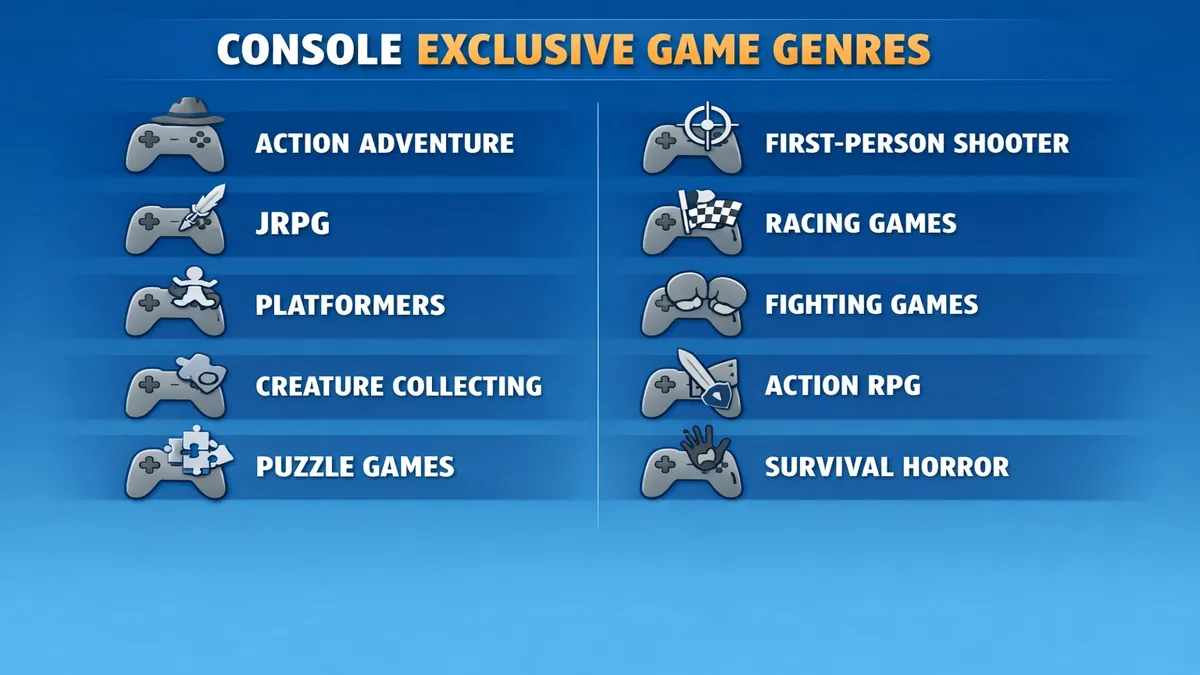
Exclusives
The battle for exclusive titles remains a critical differentiator in the console market. While many popular games are multi-platform, the unique experiences offered by first-party studios often sway consumer decisions. In 2026, both Sony and Microsoft have robust exclusive lineups, though their strategies for delivering these games differ.
PS5 Exclusives
Sony's PlayStation brand has long been synonymous with cinematic, story-driven single-player experiences, and the PS5 continues this tradition with a stellar array of exclusives. These titles are often critically acclaimed for their narrative depth, stunning graphics, and innovative gameplay. Key PS5 exclusives include:
- Spider-Man 2: Building on the success of its predecessors, this title offers an expansive open world, fluid web-slinging mechanics, and a compelling narrative featuring multiple Spider-Men.
- God of War: Ragnarök: The epic conclusion to Kratos's Norse saga, delivering breathtaking visuals, visceral combat, and a deeply emotional story.
- Horizon Forbidden West / Horizon 3 (Hypothetical): Continuing Aloy's journey in a post-apocalyptic world teeming with robotic creatures, known for its stunning environments and engaging combat.
- Gran Turismo 7: The pinnacle of realistic racing simulation, offering an unparalleled driving experience with a vast collection of cars and tracks.
- Marvel's Wolverine (Hypothetical): A highly anticipated title from Insomniac Games, promising a gritty, character-driven action experience.
- Final Fantasy VII Rebirth: A continuation of the beloved Final Fantasy VII Remake saga, offering a sprawling world and an emotional narrative.
PlayStation's strategy often involves launching these high-profile exclusives directly onto the PS5, with PC ports sometimes arriving years later. This ensures that the console remains the primary destination for these highly sought-after titles.
Xbox Exclusives
Microsoft's approach to exclusives has evolved significantly, focusing on a broader ecosystem that includes both Xbox consoles and PC. While they still have console-exclusive titles, many of their first-party games are available day-and-date on PC via Xbox Game Pass Ultimate. This strategy aims to reach a wider audience and enhance the value of their subscription service. Notable Xbox exclusives (or console exclusives) include:
- Halo Infinite: The latest installment in the iconic sci-fi shooter series, offering a vast open-world campaign and competitive multiplayer.
- Forza Motorsport / Forza Horizon (latest installments): Renowned for their stunning graphics and realistic driving physics, catering to both simulation and arcade racing fans.
- Starfield: Bethesda's ambitious space-faring RPG, offering an expansive universe to explore and countless hours of content.
- The Elder Scrolls VI (Hypothetical): The next highly anticipated installment in the legendary fantasy RPG series.
- Call of Duty (now Xbox): Following Microsoft's acquisition of Activision Blizzard, future Call of Duty titles are now part of the Xbox ecosystem, significantly bolstering its exclusive lineup.
- Fable (Hypothetical): A highly anticipated reboot of the beloved fantasy RPG series.
The key distinction here is that many Xbox exclusives are also available on PC, often through Game Pass. This means that if you own a powerful gaming PC, the allure of an Xbox console for its exclusives might be slightly diminished, as you can access many of them without purchasing the console itself. However, for those who prefer console gaming, the Xbox Series X offers a compelling library.
Subscription Services
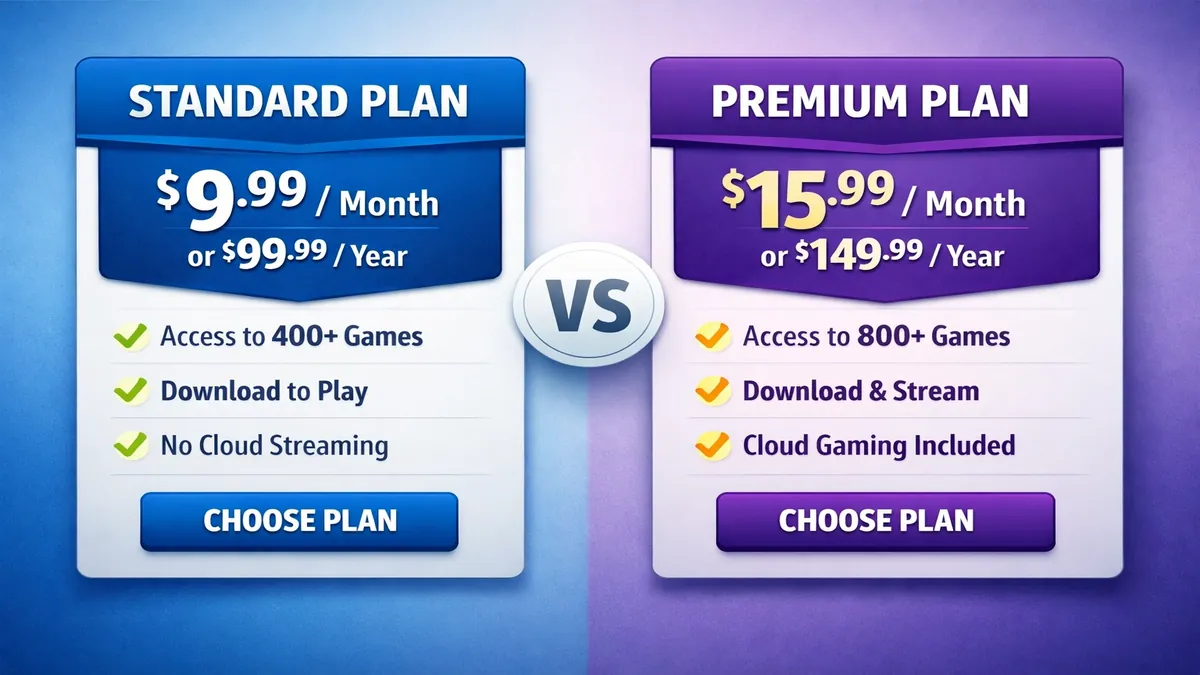
Subscription services have become an integral part of the modern console gaming experience, offering vast libraries of games for a monthly fee. Both Sony and Microsoft have invested heavily in their respective services, PlayStation Plus and Xbox Game Pass, but they offer different value propositions.
PS Plus Tiers
Sony revamped its PlayStation Plus service to offer multiple tiers, each providing different benefits:
- Essential: This tier is the baseline, offering access to online multiplayer, a few free monthly games, cloud storage for game saves, and exclusive discounts. It's comparable to the original PlayStation Plus offering.
- Extra: Building on Essential, this tier adds a catalog of hundreds of PS4 and PS5 games, including many popular first-party and third-party titles. It's akin to a Netflix for games, offering a vast library to explore.
- Premium: The top-tier subscription includes all benefits of Essential and Extra, plus a catalog of classic PS1, PS2, PS3, and PSP games, as well as cloud streaming for a selection of PS4 and PS5 games. This tier is aimed at players who want access to PlayStation's extensive back catalog and the flexibility of cloud gaming.
While PS Plus Extra and Premium offer a good selection of games, Sony's first-party exclusives typically do not launch day-and-date on the service. They are usually added several months or even years after their initial release, maintaining the incentive for players to purchase new titles at full price.
Xbox Game Pass Ultimate
Microsoft's Xbox Game Pass Ultimate is widely regarded as one of the best values in gaming. It combines several services into one comprehensive subscription:
- Game Pass Library: Access to a rotating catalog of hundreds of Xbox and PC games, including all first-party Xbox titles available day-and-date. This means you can play new releases like Halo, Forza, and Starfield on launch day without an additional purchase.
- Xbox Live Gold: Includes online multiplayer access for Xbox consoles.
- EA Play: A selection of games from Electronic Arts, including popular sports titles and RPGs.
- Cloud Gaming (Xbox Cloud Gaming): Stream a selection of Game Pass titles to various devices, including phones, tablets, and PCs, allowing for gaming on the go.
- PC Game Pass: A dedicated library of PC games, often mirroring the console Game Pass offerings.
Xbox Game Pass Ultimate is often considered the best value in gaming due to its day-one access to first-party exclusives and a constantly expanding library of high-quality titles. For many, the ability to play new Xbox games without an upfront purchase is a significant draw, making the Xbox ecosystem incredibly appealing.
Price Comparison per Year
When comparing the annual cost, Xbox Game Pass Ultimate typically comes in at a higher price point than the top tier of PlayStation Plus. However, the perceived value often balances this out, especially for those who play many new first-party Xbox titles or utilize the cloud gaming and PC Game Pass features. For casual gamers, the lower tiers of PS Plus might offer sufficient value, but for avid players, Game Pass Ultimate's comprehensive offering is hard to beat.
Who Should Buy Which
The decision between a PS5 and an Xbox Series X in 2026 ultimately boils down to individual preferences, gaming habits, and what you prioritize in a console experience.
Choose PS5 if:
- You crave cinematic single-player experiences: PlayStation's first-party studios consistently deliver critically acclaimed, story-driven games with high production values. If titles like Spider-Man, God of War, Horizon, and Gran Turismo are your primary draw, the PS5 is the clear choice.
- You are invested in the PlayStation ecosystem: If you have a significant library of PS4 games, existing PS Plus subscriptions, or friends who primarily play on PlayStation, staying within the ecosystem offers continuity and convenience.
- You prefer physical media: While both consoles have disc drives, the PS5's emphasis on traditional game purchases for its exclusives might appeal to collectors or those who prefer to buy, sell, and trade physical games.
- You value a slightly faster SSD: For those who prioritize the absolute fastest loading times and seamless transitions in games, the PS5's custom SSD offers a marginal but noticeable advantage.
Choose Xbox Series X if:
- You prioritize value and a vast game library: Xbox Game Pass Ultimate is an unparalleled offering, providing day-one access to all first-party Xbox titles and a massive rotating library of games for a single monthly fee. If you want to play a wide variety of games without purchasing each one individually, Game Pass is a game-changer.
- You enjoy Microsoft's first-party franchises: If you're a fan of Halo, Forza, Starfield, or the newly acquired Call of Duty series, the Xbox Series X (and Game Pass) is the best way to experience these titles.
- You also game on PC: The Xbox ecosystem seamlessly integrates with PC gaming, allowing you to play many Xbox exclusives on your computer. If you split your gaming time between console and PC, the Xbox offers a more unified experience.
- You want a powerful console with a larger default storage: The Xbox Series X comes with a 1TB SSD as standard, offering more usable storage out of the box compared to the PS5's 825GB.
FAQ
PS5 Digital vs Disc? Which should I buy?
The choice between the PS5 Digital Edition and the standard PS5 (with disc drive) depends on your preference for physical media and your budget. The PS5 Digital Edition is typically slightly cheaper and offers a sleeker, symmetrical design. It's ideal for players who prefer an all-digital library, enjoy the convenience of downloading games, and don't mind not being able to play physical discs or 4K Blu-ray movies. The standard PS5 with a disc drive is more versatile. It allows you to play physical game discs (which can often be found cheaper or bought used), watch 4K Blu-ray movies, and provides a backup option if your internet connection is unreliable. If you have a collection of PS4 discs or value the flexibility of physical media, the disc version is the better choice. If you're fully committed to digital, the Digital Edition is a great way to save a little money.
Xbox Series X vs S? Which should I buy?
The Xbox Series X and Series S are distinct consoles catering to different needs and budgets. The Xbox Series X is the more powerful, flagship console, offering native 4K gaming, a disc drive, and a 1TB SSD. It's designed for players who want the absolute best performance and visual fidelity. The Xbox Series S is a smaller, all-digital, and less powerful console, targeting 1440p gaming at 60-120fps, with a smaller 512GB SSD. It's significantly cheaper than the Series X and is an excellent option for casual gamers, those with 1080p or 1440p displays, or those on a tighter budget who still want access to the Xbox ecosystem and Game Pass. If 4K gaming and maximum performance are your priorities, go for the Series X. If budget and a compact, all-digital experience are more important, the Series S is a fantastic value.
Is the PS5's SSD really faster than the Xbox Series X's?
Yes, on paper, the PS5's custom SSD has a higher raw throughput (5.5 GB/s vs 2.4 GB/s for Xbox Series X). This means the PS5 can theoretically load data faster. In practice, this often translates to slightly quicker loading screens in some games on the PS5. However, both consoles offer revolutionary loading speeds compared to previous generations, and the difference is often measured in seconds rather than minutes. Game developers have become adept at optimizing for both architectures, so while the PS5's SSD is technically faster, the real-world impact on gameplay experience is often less dramatic than the raw numbers suggest. Both consoles effectively eliminate the long loading times that plagued the previous generation.
Does the Xbox Series X have better graphics than the PS5?
While the Xbox Series X has a higher theoretical GPU teraflop count (12 TFLOPS vs 10.28 TFLOPS for PS5), in practice, the difference in graphics quality between the two consoles is often imperceptible to the average gamer. Both consoles are capable of stunning 4K visuals with ray tracing. Any minor graphical differences often come down to specific game optimizations, developer expertise, and artistic choices rather than a significant hardware disparity. Both consoles deliver a premium visual experience, and you're unlikely to notice a substantial graphical advantage of one over the other in most multi-platform titles.
Should I buy a console if I have a gaming PC?
If you already own a powerful gaming PC, the decision to buy a console becomes more nuanced. For Xbox Series X, the value proposition is somewhat diminished if you have a gaming PC and subscribe to Game Pass Ultimate, as many Xbox first-party titles are available day-and-date on PC. However, a console still offers a dedicated, optimized living room gaming experience that is often simpler and more convenient than PC gaming, without the hassle of drivers or system configurations. For PS5, a console is more compelling even with a gaming PC, as its exclusive titles are not available on PC (at least not on day one, and often years later). If you want to play PlayStation's unique cinematic exclusives, a PS5 is essential. Ultimately, a console can complement a gaming PC by offering platform-exclusive titles and a different gaming environment, particularly for those who enjoy the console-specific experiences.
Conclusion
In 2026, both the PlayStation 5 and Xbox Series X stand as incredibly powerful and capable gaming machines, each offering a compelling vision for the future of interactive entertainment. The choice between them is less about one being definitively "better" and more about which ecosystem aligns best with your personal gaming preferences and priorities. If you are drawn to cinematic, narrative-driven single-player experiences and are deeply invested in the PlayStation brand, the PS5, with its stellar lineup of exclusives, remains an unparalleled choice. Its faster SSD and unique haptic feedback controller further enhance the immersive experience.
Conversely, if you prioritize sheer value, a vast and constantly updated game library, and the flexibility of playing across console and PC, the Xbox Series X, powered by the industry-leading Game Pass Ultimate, presents an incredibly compelling argument. Its slightly more powerful GPU on paper and larger default storage capacity also appeal to those seeking raw performance and convenience.
Ultimately, both consoles deliver a premium 4K gaming experience with lightning-fast load times and advanced graphical capabilities. The "console wars" of 2026 are not about one victor, but about two distinct and equally valid paths to next-generation gaming. Consider the exclusive games that excite you most, the subscription service that offers the best value for your play style, and the ecosystem that feels most comfortable. Whichever you choose, you're guaranteed years of high-quality gaming entertainment.
Amazon PS5 Amazon Xbox Series X
References
- Amazon PS5
- Amazon Xbox Series X
- PlayStation Official Website (Hypothetical)
- Xbox Official Website (Hypothetical)
- IGN - PS5 vs Xbox Series X Comparison (Hypothetical)
- Digital Foundry - Console Hardware Analysis (Hypothetical)
- GameSpot - Best Console Exclusives (Hypothetical)
- The Verge - Game Pass vs PS Plus (Hypothetical)
📚 Related Articles
* Affiliate link. We may earn a commission at no extra cost to you.
Also consider: Shop Xbox Series X on Amazon
Disclosure: This article contains affiliate links. We may earn a commission if you purchase through our links, at no extra cost to you. See our affiliate disclosure.