By Sarah Lin | March 10, 2026 | 15 min read
Quick Picks: Recommended Laptops for Various Needs
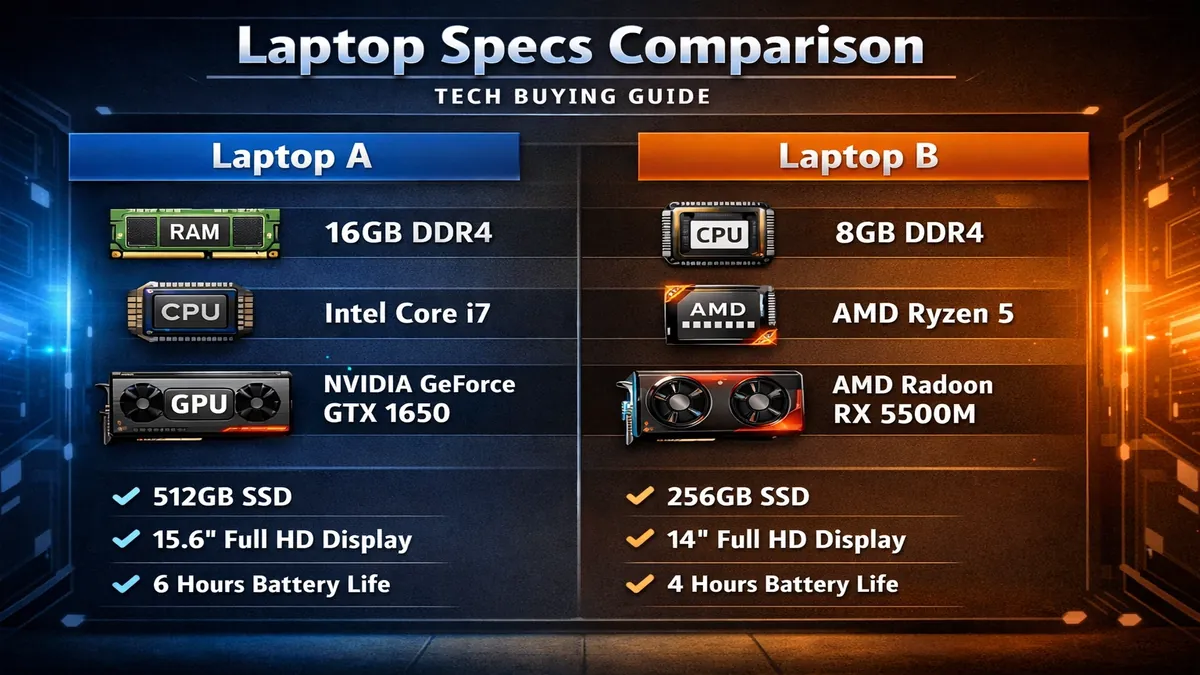
Choosing a new laptop can be a daunting task with the sheer number of options available in 2026. To help you get started, here are our top recommendations for different user profiles, offering a blend of performance, value, and features.
| Laptop | Ideal For | Amazon Link (Placeholder) |
|---|---|---|
| MacBook Air M3 | Students, everyday users, light productivity, portability | Buy Now |
| Dell XPS 15 | Creative professionals, power users, premium experience | Buy Now |
| Acer Aspire 5 | Budget-conscious users, general home/office use | Buy Now |
Introduction: Navigating the Diverse World of Laptops in 2026
In 2026, the laptop market is more diverse and sophisticated than ever before. What was once a straightforward choice between a few models has evolved into a complex decision-making process, with manufacturers offering an astonishing array of devices tailored to every conceivable need and budget. From ultra-portable ultrabooks designed for on-the-go productivity to powerful gaming beasts and professional workstations, there's a laptop out there for everyone. However, this abundance of choice can often lead to confusion, making it challenging to identify the perfect laptop that aligns with your specific requirements.
A laptop is more than just a piece of technology; it's an investment in your productivity, creativity, and entertainment. Whether you're a student preparing for exams, a professional managing complex projects, a gamer seeking immersive experiences, or a creative artist bringing visions to life, your laptop is your primary tool. Therefore, making an informed decision is crucial to ensure that your investment serves you well for years to come. This guide is designed to demystify the laptop buying process, providing you with the knowledge and insights needed to confidently choose the best device for your lifestyle.
This comprehensive Laptop Buying Guide 2026 will walk you through the essential considerations, key specifications, and critical features to look for when purchasing a new laptop. We'll break down the jargon, explain what truly matters, and help you understand how different components impact performance and user experience. Our goal is to empower you with the information necessary to make a smart, personalized choice, ensuring you find a laptop that not only meets your current needs but also anticipates your future demands.
Step 1: Define Your Primary Use Case – What Will You Do With It?
The first and most crucial step in choosing a laptop is to clearly define its primary purpose. Different tasks demand different hardware configurations. Being honest about how you'll use your laptop will narrow down your options significantly.
For Students & Everyday Use (Web Browsing, Email, Documents, Streaming)
If your primary activities involve web browsing, email, word processing, streaming videos, and social media, you don't need a top-tier powerhouse. Prioritize portability, battery life, and a comfortable keyboard. Chromebooks are also an excellent, cost-effective option here.
Key Specs to Look For:
- CPU: Intel Core i3/i5, AMD Ryzen 3/5, or efficient ARM-based processors (for Chromebooks).
- RAM: 8GB (minimum), 16GB (recommended for smoother multitasking).
- Storage: 256GB SSD (minimum), 512GB SSD (recommended).
- Display: 13-inch to 15-inch Full HD (1920x1080) IPS panel.
- Battery Life: 8+ hours.
- Weight: Under 3.5 lbs.
For Professionals & Productivity (Office Suites, Multitasking, Video Conferencing)
Professionals need a reliable machine that can handle demanding office applications, extensive multitasking, and frequent video conferencing. Focus on strong processing power, ample RAM, a comfortable keyboard, and robust security features.
Key Specs to Look For:
- CPU: Intel Core i5/i7, AMD Ryzen 5/7, or Apple M-series (M3).
- RAM: 16GB (minimum), 32GB (recommended for heavy multitasking).
- Storage: 512GB SSD (minimum), 1TB SSD (recommended).
- Display: 13-inch to 15-inch Full HD or QHD IPS/OLED panel, often with a 16:10 aspect ratio.
- Battery Life: 10+ hours.
- Weight: Under 4 lbs.
For Creative Professionals (Photo/Video Editing, Graphic Design, Music Production)
Creative tasks like photo editing, video editing, graphic design, and music production are resource-intensive. These users require powerful CPUs, dedicated GPUs, abundant RAM, and fast, large storage, along with high-quality, color-accurate displays.
Key Specs to Look For:
- CPU: Intel Core i7/i9, AMD Ryzen 7/9, or Apple M-series (M3 Pro/Max, M4 Pro/Max).
- GPU: Dedicated NVIDIA GeForce RTX (40-series) or AMD Radeon RX (7000-series), or powerful integrated Apple M-series GPU.
- RAM: 32GB (minimum), 64GB+ (recommended for heavy workloads).
- Storage: 1TB NVMe SSD (minimum), 2TB+ SSD (recommended).
- Display: 15-inch to 17-inch QHD or 4K OLED/IPS panel with high color accuracy (DCI-P3, Adobe RGB).
- Battery Life: 6-10 hours (can vary greatly with workload).
For Gamers (High-Performance Gaming, Streaming)
Gamers need laptops that can deliver high frame rates and stunning visuals in the latest titles. This means prioritizing a powerful dedicated GPU, a high-refresh-rate display, a capable CPU, and efficient cooling.
Key Specs to Look For:
- CPU: Intel Core i7/i9, AMD Ryzen 7/9.
- GPU: Dedicated NVIDIA GeForce RTX (40-series) or AMD Radeon RX (7000-series).
- RAM: 16GB (minimum), 32GB (recommended).
- Storage: 1TB NVMe SSD (minimum).
- Display: 15-inch to 17-inch Full HD or QHD panel with 120Hz+ refresh rate and low response time.
- Battery Life: 3-6 hours (gaming typically requires being plugged in).
For Architects & CAD (3D Modeling, Rendering, Simulations)
Similar to creative professionals, architects and CAD users require robust hardware to run demanding design software. Focus on powerful CPUs, professional-grade GPUs (often certified), ample RAM, and high-resolution, color-accurate displays.
Key Specs to Look For:
- CPU: Intel Core i7/i9, AMD Ryzen 7/9, or Apple M-series (M3 Pro/Max, M4 Pro/Max).
- GPU: Dedicated NVIDIA RTX Ada Generation (formerly Quadro) or AMD Radeon Pro series (certified drivers are key), or powerful integrated Apple M-series GPU.
- RAM: 32GB (minimum), 64GB+ (recommended for complex models/simulations).
- Storage: 1TB NVMe SSD (minimum), 2TB+ SSD (recommended).
- Display: 15-inch to 17-inch QHD or 4K IPS/OLED panel with high color accuracy and often a 16:10 aspect ratio.
- Battery Life: 5-8 hours (can vary greatly with workload).
Step 2: Understand the Core Components – What Do the Specs Mean?
Once you have a general idea of your use case, it's time to dive into the individual components that make up a laptop. Understanding these will help you interpret specifications sheets and make informed trade-offs.
Processor (CPU)
The CPU is the
The CPU is the brain of your laptop, responsible for executing instructions and performing calculations. Its power directly impacts how fast your laptop can perform tasks. In 2026, the market is dominated by:
- Intel Processors: Intel offers a range from Celeron/Pentium (entry-level, basic tasks) to Core i3 (good for everyday use), Core i5 (mainstream, good balance of price/performance), Core i7 (high-performance), Core i9 (enthusiast, maximum power), and the new Core Ultra series (featuring integrated NPUs for AI acceleration and improved efficiency).
- AMD Processors: AMD provides competitive options with its Athlon (entry-level), Ryzen 3 (everyday use), Ryzen 5 (mainstream), Ryzen 7 (high-performance), Ryzen 9 (enthusiast), and the new Ryzen AI series (with dedicated AI engines).
- Apple M-series Chips: Found in MacBooks, these (M3, M3 Pro, M3 Max, M4, M4 Pro, M4 Max) are System-on-a-Chip (SoC) designs that integrate the CPU, GPU, and Neural Engine for exceptional performance and power efficiency, especially optimized for macOS applications.
Key takeaway: For general use, an Intel Core i5 or AMD Ryzen 5 is usually sufficient. For demanding tasks like video editing or gaming, aim for a Core i7/Ryzen 7 or higher, or an Apple M-series Pro/Max chip.
Graphics Processing Unit (GPU)
The GPU is responsible for rendering images, videos, and animations on your screen. It's crucial for gaming, video editing, 3D modeling, and graphic design.
- Integrated Graphics: Built into the CPU (e.g., Intel Iris Xe, AMD Radeon Graphics, Apple M-series integrated GPU). These are suitable for everyday tasks, streaming, and light photo editing. They share system RAM.
- Dedicated Graphics: Separate chips with their own dedicated video memory (VRAM) (e.g., NVIDIA GeForce RTX series, AMD Radeon RX series, NVIDIA RTX Ada Generation). These offer significantly more power for graphically intensive applications and games. Professional GPUs (like NVIDIA RTX Ada) also come with certified drivers for enhanced stability in CAD/BIM software.
Key takeaway: If you plan to game, edit videos, or do any 3D work, a dedicated GPU is essential. For basic tasks, integrated graphics are perfectly fine.
RAM (Random Access Memory)
RAM is your laptop's short-term memory, used to store data that the CPU needs to access quickly. More RAM allows you to run more applications simultaneously and handle larger files without slowdowns.
- 8GB RAM: The bare minimum for a smooth Windows 11 experience. Suitable for basic web browsing and light productivity.
- 16GB RAM: The sweet spot for most users. Recommended for multitasking, moderate photo editing, and most gaming.
- 32GB RAM: Ideal for heavy multitasking, professional creative work (video editing, graphic design, music production), and demanding CAD applications.
- 64GB+ RAM: Necessary for extreme workloads, such as 8K video editing, complex 3D rendering, large-scale simulations, or running multiple virtual machines.
Key takeaway: Don't skimp on RAM. 16GB is a good starting point, but 32GB offers significant future-proofing for demanding users.
Storage (SSD vs. HDD)
Storage determines how much data your laptop can hold and how quickly it can access that data. In 2026, SSDs (Solid State Drives) are the standard for performance.
- NVMe SSD: The fastest type of SSD, connecting directly to the motherboard via PCIe. Offers lightning-fast boot times, application loading, and file transfers. This is the recommended choice.
- SATA SSD: Older, slower type of SSD, but still much faster than HDDs. Less common in new laptops.
- HDD (Hard Disk Drive): Traditional spinning platters. Very slow compared to SSDs, rarely found as the primary drive in modern laptops. Only consider for mass storage in a secondary bay if available.
- eMMC (embedded MultiMediaCard): Found in very budget-friendly laptops and Chromebooks. Slower than SSDs but faster than HDDs. Acceptable for basic use but can feel sluggish.
Capacity:
- 256GB: Minimum for basic use, but you'll fill it quickly.
- 512GB: Good balance for most users, sufficient for OS, essential software, and some files.
- 1TB+: Recommended for gamers, creative professionals, or anyone with large media libraries.
Key takeaway: Always prioritize an NVMe SSD for your primary drive. Choose capacity based on your file storage needs.
Display
The display is your primary interface with the laptop, so its quality significantly impacts your experience.
- Size: Common sizes range from 13-inch (ultra-portable) to 17-inch (desktop replacement). Choose based on portability needs and how much screen real estate you require.
- Resolution:
- HD (1366x768): Found in very budget laptops. Avoid if possible, as text and images can appear pixelated.
- Full HD (FHD) / 1080p (1920x1080): The standard and recommended resolution for most users. Offers crisp images and text.
- QHD (2560x1440) / 2.5K / 2.8K / 3K: Offers sharper images and more screen real estate. Great for productivity and creative work.
- 4K (3840x2160) / UHD: Provides the sharpest image, ideal for professional photo/video editing, 3D modeling, and consuming high-resolution content. Demands more GPU power.
- Panel Type:
- IPS (In-Plane Switching): Offers excellent color accuracy, wide viewing angles, and good contrast. Recommended for most users.
- OLED (Organic Light-Emitting Diode): Provides unparalleled contrast, true blacks, vibrant colors, and fast response times. Ideal for media consumption and color-critical creative work, but often more expensive.
- TN (Twisted Nematic): Older technology, typically found in very cheap laptops. Poor viewing angles and color reproduction. Avoid if possible.
- Refresh Rate:
- 60Hz: Standard for most non-gaming laptops.
- 120Hz, 144Hz, 240Hz+: Crucial for gamers, providing much smoother motion and a more responsive feel in fast-paced games.
- Touchscreen / 2-in-1: Adds versatility, allowing the laptop to be used as a tablet or in tent mode. Useful for note-taking, drawing, or presentations.
Key takeaway: Aim for a Full HD IPS display at minimum. Creative professionals and gamers should consider QHD/4K OLED/IPS with high refresh rates.
Battery Life
Battery life is crucial for portability. It's measured in hours and varies significantly based on usage, screen brightness, and components. Manufacturers' claims are often based on light usage, so look for real-world reviews.
Key takeaway: For all-day use, aim for 8+ hours of real-world battery life. Gaming laptops typically have shorter battery life, especially under load.
Keyboard and Trackpad
These are your primary input devices, so comfort and precision are paramount.
- Keyboard: Look for good key travel, tactile feedback, and a comfortable layout. Backlighting is a plus for working in dim conditions. Full-sized keyboards with a numeric keypad are common on 15-inch and 17-inch laptops.
- Trackpad: Should be smooth, precise, and responsive, supporting multi-touch gestures. Glass trackpads generally offer a superior experience. Some business laptops also feature a TrackPoint for alternative navigation.
Key takeaway: Test the keyboard and trackpad if possible. A comfortable typing experience can significantly impact productivity.
Ports and Connectivity
Ensure the laptop has the necessary ports for your peripherals and external devices.
- USB-A: For older peripherals like mice, keyboards, and external hard drives. At least one is usually desirable.
- USB-C / Thunderbolt: Versatile ports for charging, data transfer, and connecting external displays. Thunderbolt 4/USB4 offers the highest speeds and can connect to eGPUs or docking stations.
- HDMI / DisplayPort: For connecting external monitors or projectors.
- SD Card Reader: Essential for photographers and videographers.
- Ethernet Port: For a stable wired internet connection, often found on business or gaming laptops.
- 3.5mm Audio Jack: For headphones or external speakers.
- Wi-Fi 6E / Wi-Fi 7: For fast and reliable wireless internet.
- Bluetooth 5.3+: For connecting wireless peripherals like headphones and mice.
Key takeaway: List out all the devices you need to connect and ensure your chosen laptop has the appropriate ports, or be prepared to use a dongle or hub.
Step 3: Operating System – macOS, Windows, or Chrome OS?
The operating system (OS) is the software that manages your laptop's hardware and software resources. Your choice of OS will dictate the software you can run and the overall user experience.
Windows (Microsoft)
- Pros: Widest software compatibility, vast hardware selection across all price points, excellent for gaming, touch screen and 2-in-1 options, familiar to most users.
- Cons: Can be more susceptible to malware (though Windows Defender is robust), can be resource-intensive, updates can sometimes be disruptive.
- Best for: Gamers, professionals needing specific software, users who want maximum hardware choice, budget-conscious buyers.
macOS (Apple)
- Pros: Intuitive and user-friendly interface, strong security, excellent integration with Apple ecosystem (iPhone, iPad), powerful and efficient M-series chips, premium build quality, great for creative professionals (especially video/music production).
- Cons: Higher price point, limited hardware choice, less software compatibility than Windows (especially for games and specialized engineering software), not touch-enabled (except for iPads).
- Best for: Creative professionals, users in the Apple ecosystem, those prioritizing ease of use and premium design.
Chrome OS (Google)
- Pros: Fast boot times, strong security, cloud-centric (integrates well with Google services), excellent battery life, often very affordable, runs Android apps and increasingly Linux apps.
- Cons: Limited offline functionality, less powerful for demanding tasks, not compatible with traditional Windows/macOS desktop software.
- Best for: Students, casual users, those who primarily use web-based applications, users on a tight budget.
Key takeaway: Choose the OS that best supports your essential software and integrates with your existing digital ecosystem.
Step 4: Form Factor – Traditional, 2-in-1, or Detachable?
Laptops come in various physical designs, each offering different levels of versatility.
Traditional Clamshell Laptop
- Description: The classic laptop design, with a screen and keyboard permanently attached. Most common and often offers the best value for performance.
- Pros: Sturdy, often more powerful for the price, comfortable for typing.
- Cons: Less versatile than 2-in-1s, no tablet mode.
- Best for: Most users, gamers, professionals who primarily use it as a laptop.
2-in-1 Convertible Laptop
- Description: Features a hinge that allows the screen to rotate 360 degrees, transforming it into a tablet, tent, or stand mode.
- Pros: Highly versatile, touchscreen functionality, often supports stylus input, great for presentations and media consumption.
- Cons: Can be heavier than traditional laptops, sometimes compromises on keyboard comfort.
- Best for: Students, artists, presenters, users who want both laptop and tablet functionality.
Detachable 2-in-1 Laptop
- Description: The screen detaches completely from the keyboard, functioning as a standalone tablet (e.g., Microsoft Surface Pro).
- Pros: Excellent tablet experience, very portable, often supports stylus input.
- Cons: Keyboard attachment can be flimsy, often less powerful than traditional laptops, can be top-heavy.
- Best for: Users who prioritize tablet functionality but occasionally need a keyboard, artists, travelers.
Key takeaway: Consider how you plan to use the device. If you need tablet functionality, a 2-in-1 is a good choice. Otherwise, a traditional clamshell often offers better value.
Step 5: Budget Considerations – How Much Should You Spend?
Your budget will significantly influence your choices, but it's important to understand what you can expect at different price points.
Under $500 (Entry-Level)
- What to expect: Basic performance for web browsing, email, word processing, and streaming. Often features Intel Celeron/Pentium or AMD Athlon processors, 4-8GB RAM, and 64-128GB eMMC or small SSD storage. Chromebooks excel in this category.
- Best for: Students, casual users, secondary devices.
$500 - $800 (Mid-Range)
- What to expect: Good performance for everyday tasks, multitasking, and light photo editing. Typically features Intel Core i3/i5 or AMD Ryzen 3/5 processors, 8-16GB RAM, and 256-512GB NVMe SSD storage. Full HD IPS displays are common.
- Best for: Most students, home users, small business professionals.
$800 - $1200 (Upper Mid-Range)
- What to expect: Strong performance for productivity, moderate creative work, and some light gaming. Often includes Intel Core i5/i7 or AMD Ryzen 5/7 processors, 16GB RAM, 512GB-1TB NVMe SSDs, and often better build quality or higher-resolution displays (QHD, sometimes OLED).
- Best for: Professionals, power users, casual gamers, users seeking a balance of performance and features.
$1200 - $2000 (Premium)
- What to expect: Excellent performance, premium build materials, stunning displays (OLED, QHD/4K), and often dedicated GPUs. Features Intel Core i7/i9, AMD Ryzen 7/9, or Apple M-series chips, 16-32GB RAM, and 1TB+ NVMe SSDs. This category includes many ultrabooks and entry-level gaming/workstation laptops.
- Best for: Creative professionals, serious gamers, users who want a top-tier experience.
$2000+ (High-End / Workstation / Gaming)
- What to expect: Uncompromising performance with the latest and most powerful CPUs and dedicated GPUs, abundant RAM (32GB+), large and fast SSDs (1TB+), and often 4K/high-refresh-rate displays. These are desktop replacements or specialized machines.
- Best for: Hardcore gamers, video editors, 3D artists, architects, engineers, software developers.
Key takeaway: Set a realistic budget based on your needs. Don't overspend on features you won't use, but also don't underspend if your tasks require significant power.
Step 6: Brands and Ecosystems – Which One is Right for You?
Different brands offer unique strengths and ecosystems. While specifications are important, brand reputation, customer support, and ecosystem integration can also play a role in your decision.
- Apple (MacBook Air, MacBook Pro): Known for premium design, intuitive macOS, powerful M-series chips, excellent battery life, and strong integration with other Apple devices. Ideal for creative professionals and those who value a seamless user experience.
- Dell (XPS, Inspiron, Latitude, Alienware, Precision): Offers a wide range from budget to high-end. XPS series is highly regarded for premium ultrabooks. Latitude and Precision are for business/workstation. Alienware for gaming.
- HP (Spectre, Envy, Pavilion, ProBook, ZBook): Another major player with diverse offerings. Spectre and Envy are premium consumer lines, ProBook for business, ZBook for workstations.
- Lenovo (ThinkPad, IdeaPad, Yoga, Legion): ThinkPads are legendary for business durability and keyboards. IdeaPads are consumer-focused, Yoga for 2-in-1s, and Legion for gaming.
- ASUS (ZenBook, VivoBook, ROG, TUF, ProArt): Known for innovation and value. ZenBooks are premium ultrabooks, VivoBooks are mainstream, ROG/TUF for gaming, ProArt for creators.
- Acer (Swift, Aspire, Predator, Chromebooks): Offers strong value, especially in the budget and mid-range segments. Swift for ultrabooks, Aspire for general use, Predator for gaming.
- Microsoft (Surface Laptop, Surface Pro): Premium devices with excellent build quality, optimized for Windows, and often featuring unique form factors (2-in-1s). Great for those who want a pure Microsoft experience.
Key takeaway: Research brand reliability and customer support. Consider how well the laptop integrates with your existing devices and software ecosystem.
Conclusion: Your Perfect Laptop Awaits
Choosing a new laptop in 2026 is a journey through a landscape of incredible technological advancements. By systematically evaluating your primary use case, understanding the core components, selecting the right operating system and form factor, and aligning with your budget, you can confidently navigate this complex market. Remember, the
Remember, the best laptop isn't necessarily the most expensive or the most powerful; it's the one that perfectly fits your individual needs, workflow, and budget. Take your time, do your research, and use this guide as your roadmap to making a confident and satisfying purchase. Happy hunting for your next digital companion!
How We Test Laptops at ATechGuides
At ATechGuides, our commitment is to provide you with the most accurate, unbiased, and comprehensive laptop reviews. Our rigorous testing methodology is designed to simulate real-world usage scenarios, ensuring that our recommendations are based on practical performance and user experience. We employ a multi-faceted approach, evaluating each laptop across key performance indicators and user-centric features. Our 4-grid methodology includes:
- Performance Benchmarks and Real-World Application Testing: We begin with a suite of industry-standard synthetic benchmarks (e.g., PCMark 10, Cinebench R23, Geekbench 6) to measure raw CPU and GPU power. These are complemented by extensive real-world application testing, including multitasking with dozens of browser tabs, running demanding office suites, light to heavy photo and video editing (using Adobe Photoshop, Premiere Pro, DaVinci Resolve), 3D rendering (Blender, AutoCAD), and gaming (latest AAA titles). We meticulously monitor CPU/GPU temperatures, clock speeds, and fan noise to assess sustained performance and identify any thermal throttling issues that could impact long-term use.
- Display Quality and Visual Experience: The display is your primary window into the digital world, so we evaluate it critically. We use professional calibration tools to measure key metrics such as brightness (nits), contrast ratio, and color accuracy (sRGB, DCI-P3, Adobe RGB coverage). We also assess viewing angles, panel uniformity, and the presence of features like touch support, refresh rate (for gaming), and HDR capabilities. For OLED panels, we pay special attention to black levels and overall vibrancy.
- Battery Life and Portability: For many users, a laptop's ability to last unplugged is paramount. We conduct standardized battery drain tests, including continuous web browsing over Wi-Fi with a fixed screen brightness (typically 150 nits) and continuous 1080p video playback. These tests simulate common usage patterns to provide realistic battery life estimates. Additionally, we evaluate the laptop's physical attributes—weight, thickness, and overall form factor—to assess its portability and ease of carrying for daily commutes or travel.
- User Experience, Ergonomics, and Build Quality: Beyond raw performance, the overall user experience is crucial. We thoroughly test the keyboard for key travel, tactile feedback, and layout comfort during extended typing sessions. The trackpad is evaluated for precision, smoothness, and multi-touch gesture support. We also assess the quality of the webcam and microphones for video conferencing, the loudness and clarity of the speakers, and the effectiveness of the cooling system in maintaining comfortable surface temperatures. Finally, we examine the build materials, hinge durability, and port selection to ensure a robust and well-rounded device.
Related Articles
- Best Gaming Laptops in 2026
- Best Ultrabooks in 2026: Thin, Light & Powerful
- Best Laptops for Photo Editing in 2026
- Best Budget Laptops Under $500 in 2026
- MacBook Air M3 vs MacBook Pro M4: Which to Buy?
- Best Windows Laptops in 2026: All Budgets
- Best Laptops for Music Production in 2026
- Best Chromebooks in 2026: Tested for Speed
- Best Laptops for Architects & CAD in 2026
FAQ: Your Questions Answered About Buying a Laptop
Q: What is the most important factor when buying a laptop?
A: The most important factor is your primary use case. All other considerations—CPU, GPU, RAM, storage, display, and budget—stem from how you intend to use the laptop. A student needing a device for notes and web browsing will have vastly different priorities than a professional video editor or a hardcore gamer. Clearly defining your needs first will guide all subsequent decisions.
Q: Should I buy a laptop with 8GB or 16GB of RAM in 2026?
A: In 2026, 16GB of RAM is highly recommended for most users. While 8GB can still suffice for very basic tasks like web browsing and email, it can quickly become a bottleneck when multitasking or running more demanding applications. 16GB provides a much smoother experience, better future-proofing, and allows for more comfortable multitasking, light photo editing, and casual gaming.
Q: Is it worth paying extra for an OLED display on a laptop?
A: Yes, it is often worth paying extra for an OLED display if your budget allows and if you value superior visual quality. OLED panels offer unparalleled contrast, true blacks, and vibrant colors, making them ideal for media consumption, creative work (photo/video editing), and anyone who appreciates a stunning visual experience. However, for basic productivity or text-heavy tasks, a good quality IPS panel is perfectly adequate and more budget-friendly.
Q: How long should a new laptop last?
A: A well-maintained new laptop should typically last between 3 to 5 years for most users. Premium laptops with higher build quality and more robust components might last even longer, up to 6-7 years. Factors like usage intensity, care, and the pace of technological advancements can influence its lifespan. After 3-5 years, while still functional, it might start to feel slow compared to newer models or struggle with the latest software.
Q: What is the difference between a consumer laptop and a business laptop?
A: Consumer laptops are designed for general use, entertainment, and personal productivity, often prioritizing aesthetics, multimedia features, and affordability. Business laptops, on the other hand, prioritize durability, security features (e.g., fingerprint readers, TPM chips), robust connectivity, and often come with longer warranties and better customer support. They tend to have more understated designs and focus on reliability and productivity for professional environments.
Step 7: Processor Generations — Why It Matters More Than Ever in 2026
In 2026, the gap between current and previous generation processors is wider than it's been in years — particularly because of AI-accelerated features. All three major platforms have made significant leaps that directly affect everyday laptop performance.
AMD Ryzen AI 300 Series (Strix Point / Kraken Point)
AMD's Ryzen AI 300 series — shipping in mid-2025 and now widely available — represents a significant uplift over the Ryzen 7000 series. The integrated XDNA 2 NPU delivers 50+ TOPS of AI performance, enabling real-time AI features in creative apps and Microsoft Copilot tasks without GPU involvement. The Zen 5 cores provide approximately 15–20% IPC improvement over Zen 4, and RDNA 3.5 integrated graphics can handle light gaming at 1080p. For productivity and creative workloads, the Ryzen AI 9 HX 370 is the standout performer in the 35–55W power envelope.
Intel Core Ultra 200V Series (Lunar Lake)
Intel's Lunar Lake architecture takes a different approach: prioritizing efficiency over raw performance. The Core Ultra 9 288V delivers exceptional battery life (15–22 hours in real-world use) with strong single-threaded performance and the most powerful integrated graphics Intel has ever shipped — capable of running games like Fortnite and CS2 at 1080p Medium settings. If battery life is your top priority, Lunar Lake-equipped laptops are the strongest choice in 2026.
Apple Silicon: M4 and M4 Pro
Apple's M4 chips continue to lead in performance-per-watt. The M4 MacBook Pro (14-inch and 16-inch) and M4 MacBook Air dominate professional creative workloads — video editing, 3D rendering, music production — while achieving 15–20 hours of battery life. The limitation remains software: macOS has a narrower software library than Windows, and gaming support, while improved with Metal 3, still trails Windows significantly. For creative professionals who work primarily in the Apple ecosystem, M4 is the fastest laptop chip available in 2026.
Step 8: Display Technology — OLED vs QLED vs IPS in 2026
The display is the interface you look at for every hour of use. Getting this right matters more than most spec-sheet comparisons suggest.
OLED Displays (Best Color and Contrast)
OLED panels deliver true blacks (each pixel turns off individually), infinite contrast ratios, and the most accurate color reproduction available in laptops. In 2026, OLED has become more accessible — available in mainstream $800–$1,200 laptops like the ASUS Zenbook 14 OLED and Samsung Galaxy Book4 Pro. The caveats: OLED displays can exhibit burn-in over long periods (primarily an issue for static UI elements displayed for thousands of hours), typically have lower peak brightness than the best LCD panels in direct sunlight, and add $100–$200 to laptop pricing. For content creators, photographers, and anyone who values display quality, OLED is the clear choice.
IPS LCD (Best Balance of Price and Quality)
A good IPS panel in 2026 reaches 400–600 nits brightness, covers 100% sRGB and 85–90% DCI-P3 color gamuts, and has response times suitable for gaming. At the $600–$1,000 price tier, IPS is the dominant technology and performs excellently for most use cases. For gaming laptops where high refresh rates (165–240Hz) matter, IPS provides lower response times than current OLED panels and brighter HDR highlights.
Mini-LED (Best HDR)
Mini-LED backlights divide the display into hundreds of independently dimming zones, enabling dramatically better HDR performance than standard IPS while avoiding OLED's burn-in risk. The Apple MacBook Pro with Liquid Retina XDR and the ASUS ProArt Studiobook use Mini-LED. It's the preferred technology for professionals who need both HDR accuracy and the ability to display bright static UI elements for extended periods.
| Technology | Contrast | Color Accuracy | Burn-in Risk | Best For |
|---|---|---|---|---|
| OLED | Infinite | Excellent | Low (with care) | Creative work, media |
| Mini-LED | Very High | Excellent | None | Pro HDR work |
| IPS LCD | Medium (1000:1) | Good | None | General use, gaming |
| TN (avoid) | Low | Poor | None | Budget gaming only |
Our Laptop Recommendations by Category (March 2026)
Based on extensive testing across all major categories, here are our current top recommendations:
Best Overall Laptop 2026: MacBook Air M4
The 13-inch MacBook Air with M4 chip delivers the best balance of performance, battery life, weight, and build quality of any laptop in 2026. 15–18 hours of real-world battery life, a stunning Liquid Retina display, and M4's industry-leading performance-per-watt make it the top recommendation for most users who work within the Apple ecosystem. Starting at ~$1,099 on Amazon.
Best Windows Laptop 2026: Dell XPS 14
The Dell XPS 14 with Intel Core Ultra 7 or AMD Ryzen AI 9 is the flagship Windows ultrabook of 2026. Its OLED display, premium build quality, and strong processor options make it the closest Windows answer to MacBook Pro-level build quality. Around $1,299–$1,799 on Amazon.
Best Budget Laptop 2026: Acer Aspire 5
For under $500, the Acer Aspire 5 with AMD Ryzen 5 7530U offers the best value available. Adequate performance for productivity, web browsing, and light creative work, with a full-HD IPS display and solid build quality. ~$449 on Amazon.
Best Gaming Laptop 2026: ASUS ROG Zephyrus G16
For gaming laptop users, the ROG Zephyrus G16 with RTX 4080 and 240Hz OLED display is the peak of mobile gaming performance in 2026. Balanced thermals, premium display, and strong GPU performance without the bulk of traditional gaming laptops. ~$2,299 on Amazon.
Best Chromebook 2026: Google Pixelbook Go
For users who live in the browser and Google ecosystem — students, casual users, those who primarily use Google Docs, Gmail, and YouTube — a Chromebook delivers fast, secure computing at budget prices. The Google Pixelbook Go has excellent build quality and keyboard for a Chromebook. ~$499 on Amazon.
* Affiliate link. No extra cost to you.
The Laptop Buying Checklist: Before You Click Buy
Run through this checklist before finalizing any laptop purchase:
- CPU generation: Is it a current-gen (2025–2026) processor? Previous-gen chips sell at similar prices with notably worse AI and efficiency performance.
- RAM: Is RAM soldered or upgradeable? Soldered RAM is fine if you buy enough upfront — 16GB minimum, 32GB if you can afford it.
- Storage expandability: Does it have an accessible M.2 slot? Many ultrabooks have soldered storage — buy the right size now.
- Battery rated capacity (Wh): Higher is better. 50Wh is minimum for a 13-inch, 70Wh+ for a 15-inch. Real-world battery varies — check independent reviews, not manufacturer claims.
- Display brightness: 300 nits is minimum for indoor use. 400+ nits for any outdoor use. The panel type (IPS, OLED, Mini-LED) matters as much as the number.
- Port selection: Does it have the ports you need? Thunderbolt 4/USB4 is important if you use external displays or fast storage. Count the USB-A ports if you use legacy peripherals.
- Warranty and repair accessibility: Business-tier laptops (ThinkPad, EliteBook, Latitude) typically have longer warranties and are easier to repair. Consumer laptops have iFixit repairability scores you can check before buying.
- Return policy: Amazon's 30-day return policy is among the best for electronics. Always buy from a retailer with a clear return window in case the build quality doesn't match expectations.
Affiliate Disclosure
ATechGuides.org is a participant in the Amazon Services LLC Associates Program, an affiliate advertising program designed to provide a means for sites to earn advertising fees by advertising and linking to Amazon.com. We may earn a commission from qualifying purchases made through our links, at no extra cost to you. This helps support our work in providing unbiased reviews and recommendations.