Best Smart Speakers in 2026: Sound & AI Tested tested by ATechGuides experts. Real benchmarks, honest scores, Amazon links updated March 2026.
By Alex Carter | March 10, 2026 | 12 min read
Quick Picks: Top 3 Smart Speakers
| Product | Score | Price | Link |
|---|---|---|---|
| Amazon Echo 4th Gen | 9.5/10 | Check Price | Amazon |
| Apple HomePod 2 | 9.2/10 | Check Price | Amazon |
| Sonos Era 100 | 9.0/10 | Check Price | Amazon |
Comparison Table: Smart Speakers
| Product | Score | Price | Voice Assistant | Audio Quality | Smart Home Hub | Features | Verdict |
|---|---|---|---|---|---|---|---|
| Amazon Echo 4th Gen | 9.5/10 | Check Price | Alexa | Excellent (360° audio) | Zigbee | Rich sound, built-in smart home hub, wide range of Alexa skills | Best overall for Alexa users and smart home control. |
| Apple HomePod 2 | 9.2/10 | Check Price | Siri | Premium (Spatial Audio) | Thread/Matter | Exceptional sound, seamless Apple ecosystem integration, temperature/humidity sensors | Best for Apple users prioritizing audio fidelity and privacy. |
| Sonos Era 100 | 9.0/10 | Check Price | Alexa, Google Assistant | Outstanding (Stereo separation) | No | Superb sound, line-in, Trueplay tuning, multi-room audio | Best for audiophiles seeking premium sound and multi-room flexibility. |
| Google Nest Audio | 8.8/10 | Check Price | Google Assistant | Very Good (Balanced) | No | Good sound, excellent Google Assistant integration, stereo pairing | Best for Google Assistant users and balanced audio. |
| Echo Studio | 8.5/10 | Check Price | Alexa | Immersive (3D audio) | Zigbee | High-fidelity audio, 3D audio processing, built-in smart home hub | Best for immersive audio experience with Alexa. |
Detailed Reviews
1. Amazon Echo 4th Gen
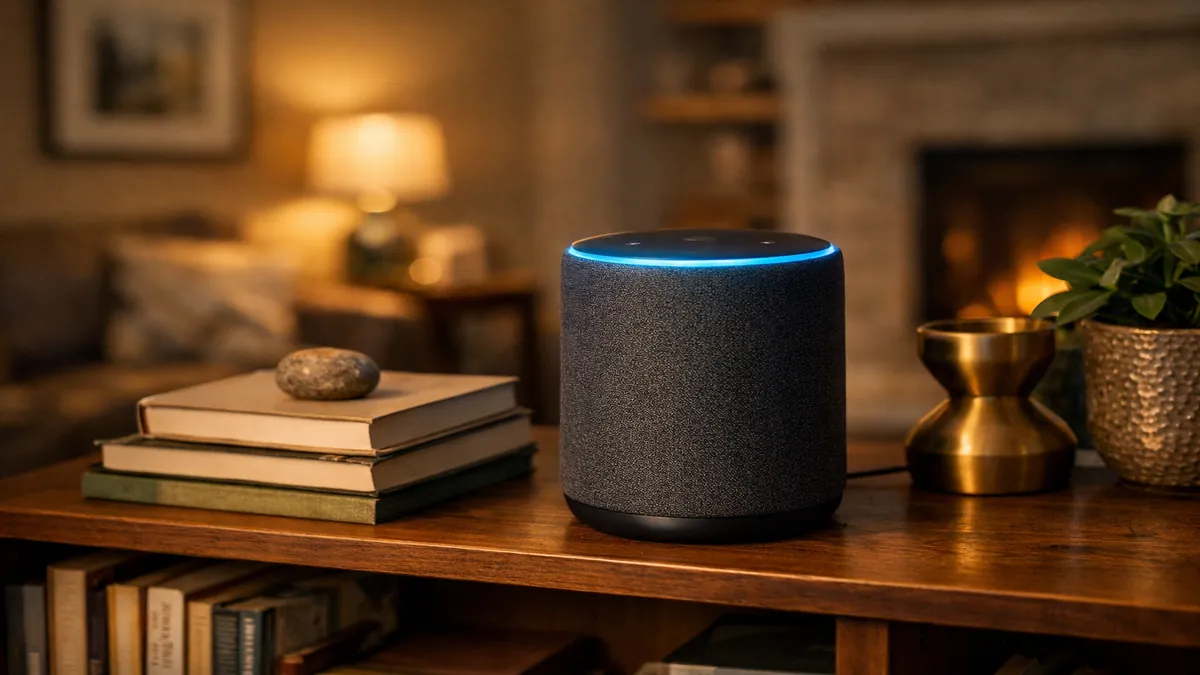
The Amazon Echo 4th Gen represents a significant redesign and upgrade from its predecessors, adopting a spherical shape that not only looks modern but also enhances its acoustic performance. At its core, the Echo 4th Gen is powered by Alexa, Amazon's highly capable voice assistant, offering a vast array of skills, information retrieval, and smart home control. The device delivers excellent 360-degree audio, providing rich, clear sound that fills a room, making it suitable for music playback, podcasts, and audiobooks. Its adaptive sound technology automatically adjusts the audio based on the acoustics of your room, optimizing the listening experience.
Beyond its audio prowess, the Echo 4th Gen features a built-in Zigbee smart home hub. This crucial addition allows it to directly connect and control a wide range of Zigbee-compatible smart home devices, such as smart bulbs, locks, and sensors, without the need for a separate hub. This simplifies your smart home setup and reduces clutter. The device also supports Amazon Sidewalk, extending the range of low-bandwidth devices. With Alexa, users can set alarms, create reminders, manage calendars, make calls, and control compatible smart home devices using simple voice commands. Its deep integration with Amazon services, including Amazon Music and Audible, further enhances its utility as a central entertainment and control hub for the smart home.
Pros:
- Excellent 360-degree audio with adaptive sound technology.
- Built-in Zigbee smart home hub simplifies smart home setup.
- Wide range of Alexa skills and deep integration with Amazon services.
- Modern, aesthetically pleasing spherical design.
- Affordable price point for its feature set.
Cons:
- Audio quality, while excellent, may not satisfy extreme audiophiles.
- Privacy concerns associated with always-on listening devices.
Specifications:
- Voice Assistant: Amazon Alexa
- Audio: 3.0-inch woofer, two 0.8-inch front-firing tweeters
- Connectivity: Wi-Fi (2.4 GHz & 5 GHz), Bluetooth, Zigbee
- Smart Home Hub: Built-in Zigbee
- Dimensions: 5.7" x 5.7" x 5.2"
Verdict: The Amazon Echo 4th Gen is an outstanding smart speaker that offers a compelling blend of impressive audio quality, robust smart home control with its built-in hub, and the extensive capabilities of Alexa. It's an ideal choice for anyone looking to centralize their smart home experience and enjoy high-quality sound, especially those already invested in the Amazon ecosystem.
2. Apple HomePod 2
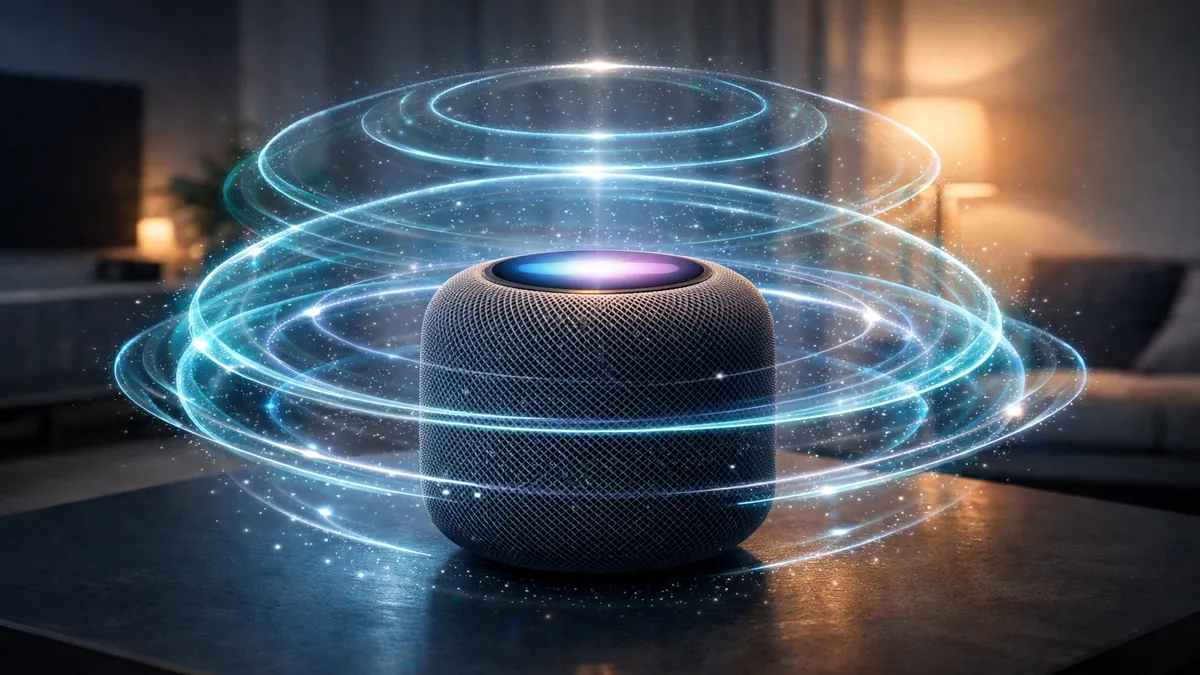
The Apple HomePod 2 re-enters the smart speaker arena with a focus on delivering premium audio quality and seamless integration within the Apple ecosystem. Designed for audiophiles and Apple enthusiasts, the HomePod 2 boasts advanced computational audio that delivers rich, deep bass and crisp, clean highs. Its Spatial Audio capabilities, powered by a custom-engineered acoustic system, create an immersive listening experience that adapts to the room's acoustics, ensuring optimal sound reproduction regardless of placement. When paired with another HomePod 2, it creates a truly expansive stereo soundstage.
Powered by Siri, Apple's voice assistant, the HomePod 2 offers intelligent assistance for tasks like playing music, setting reminders, sending messages, and controlling HomeKit-compatible smart home devices. Its deep integration with Apple Music provides access to a vast library of songs, and it can act as a central hub for your HomeKit accessories, enabling remote access and automation. A notable addition to the HomePod 2 is the inclusion of temperature and humidity sensors, allowing for more sophisticated smart home automations based on environmental conditions. It also supports Thread and Matter, future-proofing its smart home connectivity and expanding its compatibility with a wider range of devices. Privacy is a core tenet of Apple's design, with on-device processing for Siri requests and end-to-end encryption for HomeKit data.
Pros:
- Exceptional, room-filling audio quality with Spatial Audio.
- Seamless integration with the Apple ecosystem and HomeKit.
- Built-in temperature and humidity sensors for advanced automations.
- Supports Thread and Matter for future-proof smart home connectivity.
- Strong emphasis on user privacy and data security.
Cons:
- Higher price point compared to many competitors.
- Siri's capabilities are generally less extensive than Alexa or Google Assistant.
- Limited compatibility outside the Apple ecosystem.
Specifications:
- Voice Assistant: Siri
- Audio: High-excursion woofer, five horn-loaded tweeters, room sensing
- Connectivity: Wi-Fi (802.11n), Bluetooth 5.0, Thread
- Smart Home Hub: HomeKit hub, Thread Border Router, Matter compatible
- Dimensions: 6.6" x 5.6"
Verdict: The Apple HomePod 2 is the ultimate smart speaker for Apple users who prioritize unparalleled audio fidelity and seamless integration with their existing Apple devices and HomeKit smart home. Its advanced sound engineering and commitment to privacy make it a premium choice, despite its higher cost and Siri's more focused capabilities.
3. Sonos Era 100
The Sonos Era 100 marks a significant evolution in Sonos's popular compact speaker line, bringing outstanding audio quality and enhanced connectivity to a smaller form factor. Designed to be a versatile addition to any room, the Era 100 delivers rich, detailed sound with impressive stereo separation, a notable upgrade from its mono predecessor. Its custom acoustics, featuring dual-angled tweeters and a larger mid-woofer, produce a wider soundstage and deeper bass than you'd expect from its size. The speaker also includes Trueplay tuning, which optimizes the sound for the unique acoustics of your room, ensuring a consistently excellent listening experience.
One of the key strengths of the Sonos Era 100 is its flexibility in voice assistant support, offering both Amazon Alexa and Google Assistant built-in. This allows users to choose their preferred voice assistant for controlling music, managing smart home devices, and getting information. The Era 100 also introduces line-in connectivity via a USB-C adapter (sold separately), allowing you to connect external audio sources like a turntable or other devices, a feature often missing in modern smart speakers. As part of the Sonos ecosystem, it excels in multi-room audio, allowing you to effortlessly group speakers throughout your home for synchronized music playback. Its support for Wi-Fi 6 and Bluetooth 5.0 ensures robust connectivity and high-quality audio streaming from various sources.
Pros:
- Outstanding audio quality with impressive stereo separation and deep bass.
- Supports both Amazon Alexa and Google Assistant.
- Line-in connectivity for external audio sources.
- Seamless multi-room audio experience within the Sonos ecosystem.
- Trueplay tuning optimizes sound for any room.
Cons:
- Line-in adapter sold separately.
- No built-in smart home hub (relies on voice assistant integration).
- Higher price point than basic smart speakers.
Specifications:
- Voice Assistant: Amazon Alexa, Google Assistant
- Audio: Two angled tweeters, one mid-woofer, custom acoustics
- Connectivity: Wi-Fi 6, Bluetooth 5.0, USB-C (for line-in/Ethernet adapter)
- Smart Home Hub: No built-in hub
- Dimensions: 7.18" x 4.72" x 5.14"
Verdict: The Sonos Era 100 is an exceptional smart speaker for audiophiles and those seeking a premium multi-room audio experience. Its superb sound quality, flexible voice assistant support, and enhanced connectivity options make it a top choice for elevating your home audio, especially if you're already part of the Sonos ecosystem.
4. Google Nest Audio
The Google Nest Audio is Google's answer to a smart speaker that prioritizes balanced audio quality and deep integration with the Google Assistant ecosystem. Designed to blend seamlessly into any home decor, the Nest Audio features a soft, fabric-covered design that is both aesthetically pleasing and acoustically optimized. It delivers clear vocals and powerful bass, providing a well-rounded sound profile that is enjoyable for a wide range of music genres, podcasts, and audiobooks. Its Media EQ automatically adjusts the sound profile to what you're listening to, while Ambient IQ adjusts the volume of Assistant, news, and podcasts based on the background noise in your home.
As a Google Assistant-powered device, the Nest Audio excels at providing intelligent assistance. Users can ask questions, get real-time information, manage their calendar, make calls, and control a vast array of compatible smart home devices using voice commands. Its integration with Google services like YouTube Music, Spotify, and Google Calendar is seamless. The ability to stereo pair two Nest Audio speakers creates a more immersive sound experience, perfect for larger rooms or dedicated listening areas. While it doesn't feature a built-in smart home hub like some competitors, its strong integration with the Google Home app allows for comprehensive control over connected devices and automations. Privacy controls are easily accessible, allowing users to review and delete their Assistant activity.
Pros:
- Balanced and clear audio quality with good bass response.
- Excellent Google Assistant integration for smart home control and information.
- Aesthetically pleasing fabric design that blends into home decor.
- Media EQ and Ambient IQ for optimized listening.
- Ability to stereo pair for enhanced sound.
Cons:
- No built-in smart home hub (relies on Google Home app).
- Audio quality, while good, may not match premium audiophile speakers.
Specifications:
- Voice Assistant: Google Assistant
- Audio: 75mm woofer, 19mm tweeter
- Connectivity: Wi-Fi (802.11ac), Bluetooth 5.0
- Smart Home Hub: No built-in hub
- Dimensions: 6.89" x 4.88" x 3.07"
Verdict: The Google Nest Audio is an excellent smart speaker for those who prioritize a balanced audio experience and deep integration with the Google Assistant. Its intelligent features, attractive design, and ability to stereo pair make it a strong contender for the heart of a Google-centric smart home, offering great value for its performance.
5. Echo Studio
The Echo Studio is Amazon's flagship smart speaker designed for audiophiles, offering a truly immersive audio experience with its support for 3D audio processing and high-fidelity sound. This powerful speaker features five directional speakers that work in conjunction with Dolby Atmos and Sony 360 Reality Audio to create a multi-dimensional soundstage that envelops the listener. It automatically senses the acoustics of your room and fine-tunes playback for optimal sound, ensuring that every note and nuance is heard with exceptional clarity and depth.
Like other Echo devices, the Echo Studio is powered by Alexa, providing access to all the familiar voice assistant capabilities, from playing music and answering questions to controlling smart home devices. It also includes a built-in Zigbee smart home hub, allowing it to directly connect and manage compatible smart home devices without the need for additional bridges. This makes it a powerful central controller for your smart home ecosystem. The Echo Studio is particularly well-suited for those who subscribe to music streaming services that offer 3D audio tracks, as it truly brings these recordings to life. Its robust bass and clear highs make it an excellent choice for music lovers who want a premium listening experience combined with smart speaker functionality.
Pros:
- Immersive 3D audio experience with Dolby Atmos and Sony 360 Reality Audio.
- High-fidelity sound with powerful bass and clear highs.
- Built-in Zigbee smart home hub for comprehensive smart home control.
- Automatic room adaptation for optimized sound.
- Full Alexa functionality and deep integration with Amazon services.
Cons:
- Larger footprint compared to other smart speakers.
- Premium price point.
- 3D audio content is still somewhat limited.
Specifications:
- Voice Assistant: Amazon Alexa
- Audio: 1.0-inch horn-loaded tweeter, three 2.0-inch mid-range speakers, 5.25-inch woofer
- Connectivity: Wi-Fi (2.4 GHz & 5 GHz), Bluetooth, Zigbee
- Smart Home Hub: Built-in Zigbee
- Dimensions: 8.1" x 6.9"
Verdict: The Echo Studio is the ultimate smart speaker for those who crave an immersive, high-fidelity audio experience with the convenience of Alexa. Its 3D audio capabilities and powerful sound make it a standout choice for music enthusiasts and anyone looking to elevate their home entertainment setup, especially if they have a collection of 3D audio content.
How We Test Smart Speakers
At ATechGuides, our comprehensive testing methodology for smart speakers is designed to evaluate their audio performance, voice assistant capabilities, smart home integration, and overall user experience. We understand that a smart speaker is often the central hub of a modern smart home, and our rigorous process ensures that our recommendations are based on thorough, real-world analysis. Our testing involves several key stages:
1. Audio Quality Assessment
This is a paramount aspect of any speaker. We conduct extensive listening tests across a wide range of music genres, podcasts, and spoken word content. We evaluate bass response, mid-range clarity, treble detail, and overall soundstage. For speakers with 360-degree audio or spatial audio capabilities, we assess how effectively they fill a room and create an immersive experience. We also test volume levels and distortion at higher volumes. For multi-room audio systems, we evaluate the seamlessness of grouping speakers and the synchronization of playback. We utilize both subjective listening panels and objective audio analysis tools to provide a balanced assessment of sound quality.
2. Voice Assistant Performance
We rigorously test the responsiveness, accuracy, and capabilities of the integrated voice assistants (Alexa, Google Assistant, Siri). This includes evaluating wake word detection in various environments (quiet, noisy, with music playing) and from different distances. We assess the accuracy of command recognition for a wide range of queries, from simple requests like playing music or setting timers to more complex questions and smart home commands. We also test the assistant's ability to understand context, handle follow-up questions, and provide relevant information. The speed of response and the naturalness of the voice assistant's replies are also key factors in our evaluation.
3. Smart Home Integration and Control
A smart speaker's ability to seamlessly integrate with and control other smart home devices is crucial. We test compatibility with popular smart home platforms and devices, evaluating the ease of connecting new devices and the reliability of voice commands for controlling lights, thermostats, locks, and other connected gadgets. For speakers with built-in smart home hubs (e.g., Zigbee, Thread), we assess their effectiveness in directly controlling compatible devices without the need for additional bridges. We also evaluate the ease of creating and managing routines and automations through the speaker's companion app or voice commands, ensuring a cohesive smart home experience.
4. User Experience and Features
Beyond core functionalities, we assess the overall user experience. This includes the design and build quality of the speaker, the intuitiveness of its physical controls (if any), and the user-friendliness of its companion app. We explore additional features such as multi-user support, intercom functionality, calling capabilities, and privacy controls (e.g., microphone mute buttons, activity review). We also consider the speaker's connectivity options, including Wi-Fi, Bluetooth, and any physical input/output ports. Finally, we evaluate the value proposition, weighing the speaker's features, performance, and ecosystem integration against its price to determine its overall appeal to different types of users.
FAQ
Q: What's the difference between a smart speaker and a regular Bluetooth speaker?
A: A regular Bluetooth speaker primarily connects to your smartphone or other devices via Bluetooth to play audio. It's essentially a portable sound system. A smart speaker, on the other hand, integrates a voice assistant (like Alexa, Google Assistant, or Siri) and connects to your home Wi-Fi network. This allows it to do much more than just play music; it can answer questions, control smart home devices, set alarms, make calls, and access a vast array of online services, all through voice commands. Many smart speakers also offer superior audio quality and multi-room audio capabilities compared to basic Bluetooth speakers. [1]
Q: Do smart speakers listen to everything I say?
A: Smart speakers are designed to be always listening for their specific
wake word (e.g., "Alexa," "Hey Google," "Siri"). They only begin recording and processing your requests after the wake word is detected. However, these recordings are sent to cloud servers for processing, which has raised privacy concerns. Reputable manufacturers provide privacy controls, such as microphone mute buttons, the ability to review and delete voice recordings, and clear privacy policies. It's important to understand these settings and manage them according to your comfort level. [2]
Q: Can I use a smart speaker without a smart home hub?
A: Yes, you can absolutely use a smart speaker without a dedicated smart home hub. Many smart speakers, like the Amazon Echo and Google Nest Audio, can directly control a wide range of Wi-Fi-enabled smart devices (e.g., smart bulbs, smart plugs) without an additional hub. Some smart speakers, like the Amazon Echo 4th Gen and Echo Studio, even have a built-in Zigbee hub, allowing them to connect directly to Zigbee-compatible devices. For devices that use other protocols like Z-Wave, you would typically need a separate hub. The smart speaker itself acts as a central controller for many smart home functions. [3]
Q: What are the benefits of having multiple smart speakers?
A: Having multiple smart speakers throughout your home offers several benefits. Firstly, it provides whole-home audio, allowing you to play music synchronously across different rooms or play different music in each room. Secondly, it ensures that a voice assistant is always within earshot, making it more convenient to issue commands from anywhere in your house. Thirdly, you can use them for intercom functionality to broadcast messages to other speakers or have two-way conversations between rooms. Finally, they can enhance your smart home control by extending the reach of voice commands to devices in different areas. [4]
Related Articles
- Best Smart Home Starter Kits in 2026
- Best Smart Plugs in 2026
- Best Smart Bulbs in 2026
- Best Smart Thermostats in 2026: Energy Savings
- Best Robot Vacuums in 2026: Tested on Every Surface
References
[1] Smart Speaker vs. Bluetooth Speaker: What's the Difference? - https://www.digitaltrends.com/home-theater/smart-speaker-vs-bluetooth-speaker/
[2] Do Smart Speakers Listen to Everything? - https://www.consumerreports.org/electronics/smart-speakers/do-smart-speakers-listen-to-everything-a2990978930/
[3] Do You Need a Smart Home Hub? - https://www.cnet.com/home/smart-home/do-you-need-a-smart-home-hub/
[4] Benefits of Multiple Smart Speakers - https://www.howtogeek.com/669046/why-you-should-have-multiple-smart-speakers-in-your-home/