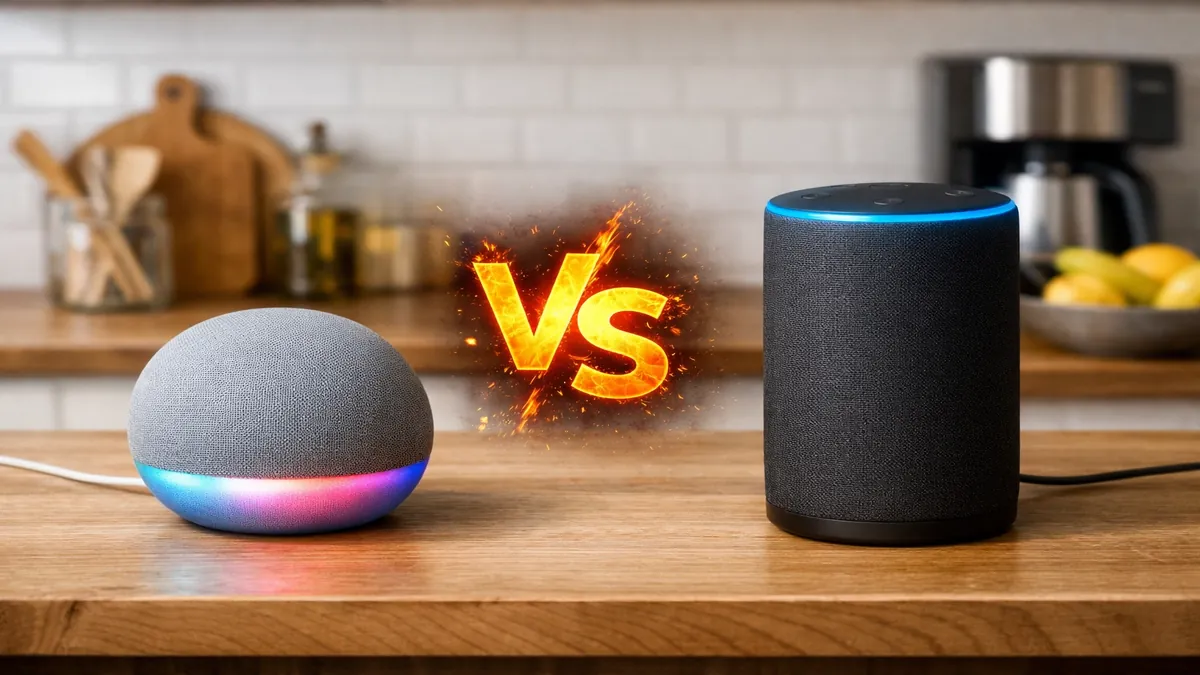
Google Nest vs Amazon Echo 2026: Which Smart Speaker Wins?
Introduction
In 2026, the smart speaker market remains a fiercely contested battleground, primarily dominated by two tech giants: Google with its Nest line and Amazon with its Echo devices. These smart speakers have evolved from simple voice assistants into central hubs for smart homes, offering everything from music playback and information retrieval to controlling an array of connected devices. The choice between a Google Nest and an Amazon Echo device is often the foundational decision for consumers embarking on their smart home journey, as it dictates the ecosystem they will primarily interact with.
This comprehensive comparison delves into the nuances of the Google Nest and Amazon Echo ecosystems in 2026, examining their strengths and weaknesses across critical aspects such as sound quality, the intelligence of their respective AI assistants (Gemini vs. Alexa), smart home compatibility, pricing, privacy considerations, and supported music services. We will explore how advancements in AI, particularly Google's integration of Gemini and Amazon's continuous refinement of Alexa, have shaped their capabilities. By providing a detailed head-to-head analysis, this article aims to help prospective buyers determine which smart speaker ecosystem best aligns with their needs, preferences, and existing technological landscape, ultimately answering the question: Which smart speaker truly wins in 2026?
Two Dominant Smart Speaker Ecosystems
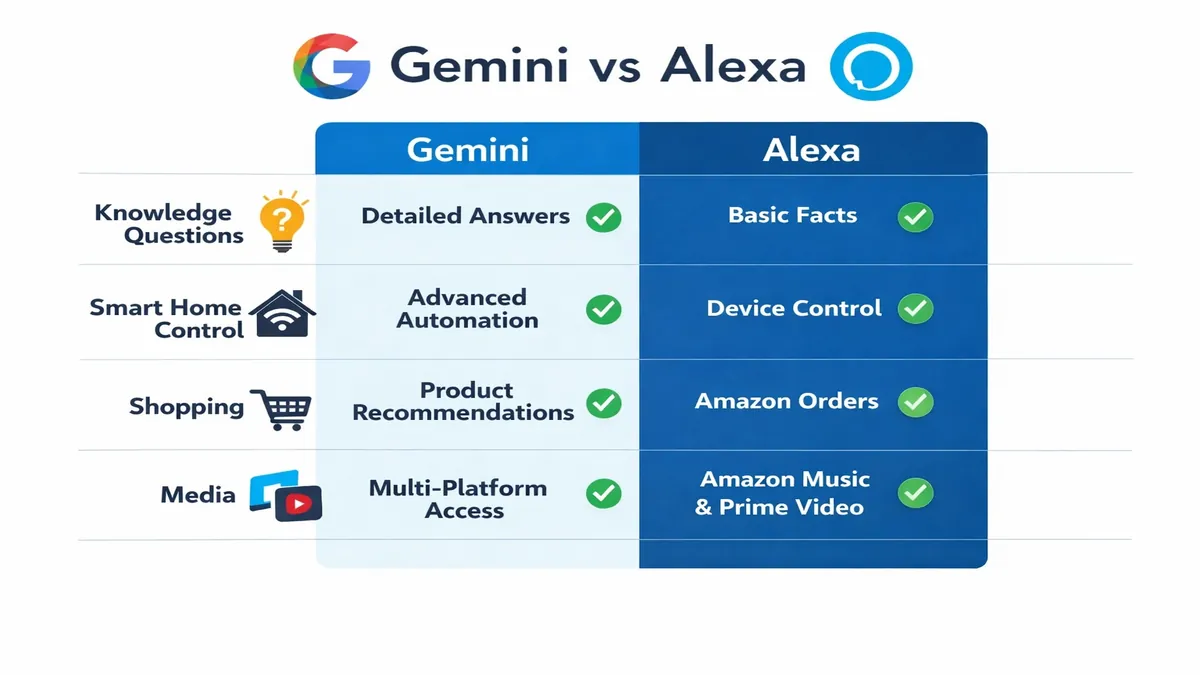
The smart speaker landscape is largely defined by the rivalry between Google and Amazon. Both companies have invested heavily in developing their voice assistants and hardware, creating two distinct, yet equally powerful, ecosystems. Understanding the core philosophy behind each can illuminate the differences in their offerings.
Google's approach, epitomized by its Nest devices, is deeply rooted in its vast knowledge graph and artificial intelligence capabilities. The Google Assistant, now heavily influenced by the advanced Gemini AI, aims to be a proactive, context-aware assistant that can answer complex questions, manage schedules, and integrate seamlessly with Google's suite of services. Google Nest speakers are often seen as intelligent information hubs, designed to provide comprehensive answers and anticipate user needs.
Amazon, on the other hand, with its Echo devices and Alexa assistant, has focused on ubiquity, device compatibility, and a robust smart home control platform. Alexa is known for its extensive skill library (Skills) and its ability to control a vast array of smart home devices. Amazon Echo devices are often seen as the central command center for a connected home, designed to execute commands and automate routines efficiently.
In 2026, the key differentiator is often the underlying AI. Google has integrated its advanced Gemini AI into the Google Assistant, promising more natural conversations, better contextual understanding, and proactive assistance. Amazon continues to refine Alexa, focusing on speed, accuracy, and expanding its smart home capabilities. The choice between them often comes down to which AI assistant you prefer interacting with and which ecosystem better supports your existing devices and digital habits.
Head-to-Head Table
| Feature | Google Nest (with Gemini) | Amazon Echo (with Alexa) |
|---|---|---|
| Sound Quality | Excellent (Nest Audio, Nest Hub Max) | Excellent (Echo Studio, Echo Show) |
| AI Assistant | Google Assistant + Gemini (Superior contextual understanding, complex queries) | Alexa (Vast skill library, robust smart home control) |
| Smart Home | Good (Deep integration with Nest products, Matter support) | Excellent (Widest device compatibility, Matter support) |
| Price | Mid-range to Premium | Entry-level to Premium |
| Privacy | Improving (Local processing for some tasks) | Improving (Privacy controls, local processing for some tasks) |
| Music Services | YouTube Music, Spotify, Apple Music, Pandora, etc. | Amazon Music, Spotify, Apple Music, Pandora, etc. |
| Ecosystem Focus | Information, AI, Google Services | Smart Home Control, Shopping, Entertainment |
Smart Assistant: Gemini vs. Alexa AI in 2026
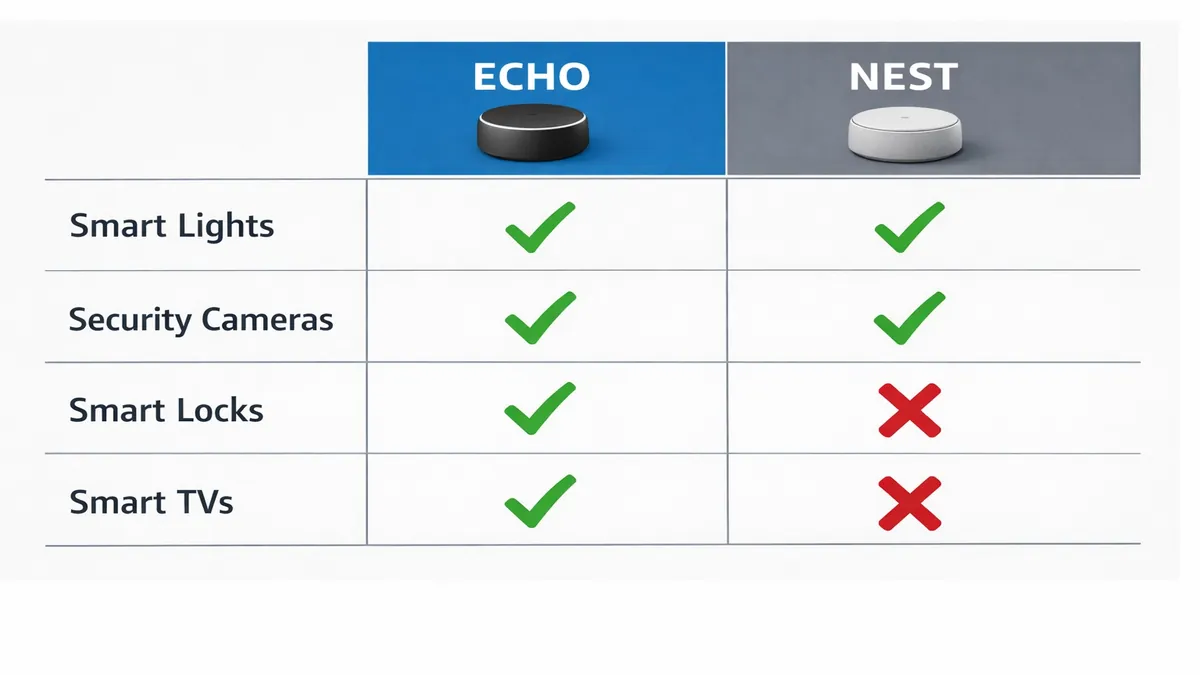
The intelligence of the underlying AI assistant is arguably the most critical factor in the smart speaker experience. In 2026, both Google and Amazon have made significant strides, with Google integrating its powerful Gemini AI and Amazon continuously enhancing Alexa.
Google Assistant + Gemini: Better at Questions
Google Assistant, now supercharged by Gemini on-device integration, excels in its ability to understand and respond to complex, multi-part questions. Leveraging Google's vast search engine and knowledge graph, Gemini provides more comprehensive, nuanced, and contextually relevant answers. It's particularly adept at:
- Natural Language Understanding: Gemini allows for more conversational interactions, understanding follow-up questions without needing to restate the entire query.
- Complex Information Retrieval: Whether you're asking about historical facts, scientific concepts, or current events, Gemini can synthesize information from various sources to provide detailed responses.
- Proactive Assistance: With its deep integration into Google services, Gemini can offer proactive suggestions based on your calendar, location, and habits, such as reminding you to leave for an appointment based on real-time traffic.
- Multimodal Capabilities: On devices like the Nest Hub Max, Gemini can combine voice and visual information, showing search results, recipes, or video clips on the screen while responding verbally.
For users who frequently ask their smart speaker for information, research, or complex tasks, the Google Assistant with Gemini offers a superior, more intelligent conversational experience.
Alexa: Better Smart Home Control, More Skills
Amazon's Alexa, while also continuously improving its general knowledge, has historically focused on being the ultimate smart home controller and a platform for a vast array of third-party integrations. Its strengths lie in:
- Vast Skill Library: Alexa boasts an enormous library of Skills (voice apps) that extend its functionality far beyond basic commands. These skills cover everything from games and news briefings to controlling specific smart home devices and ordering products.
- Robust Smart Home Control: Alexa is exceptionally good at controlling a wide variety of smart home devices from different manufacturers. Its routines and groups allow for complex automations and seamless control of multiple devices with a single command.
- Shopping Integration: As an Amazon product, Alexa offers unparalleled integration with Amazon's shopping ecosystem, making it incredibly easy to reorder products, track packages, and discover new items.
- Device Compatibility: Alexa's open platform has encouraged a vast number of manufacturers to integrate with it, resulting in the widest range of compatible smart home devices.
While Gemini is catching up in some areas, Alexa's sheer breadth of skills and its established dominance in smart home control give it an edge for users who prioritize automation and a wide range of third-party integrations.
Smart Home: Echo vs. Nest Integration
The smart home capabilities of both ecosystems are central to their appeal, but they cater to slightly different integration philosophies.
Echo: Wider Device Compatibility
Amazon Echo devices, powered by Alexa, have historically offered the widest device compatibility in the smart home market. This is largely due to Amazon's open approach, which has encouraged thousands of manufacturers to make their products compatible with Alexa. This means that regardless of the brand of your smart lights, thermostats, locks, or cameras, there's a high probability they will work seamlessly with your Echo device. This broad compatibility makes Alexa an excellent choice for users who already own a variety of smart devices or prefer to mix and match brands.
Furthermore, Amazon has been a strong proponent of the Matter standard, ensuring that newer Echo devices act as Matter controllers, further enhancing their ability to integrate with a wider range of future-proof smart home products. Alexa's strength lies in its ability to act as a central hub, orchestrating complex routines and automations across a diverse ecosystem of devices, often with simple voice commands.
Nest: Better Google/YouTube TV Integration
Google Nest devices, while also supporting a wide range of smart home products, offer particularly strong integration with Google's own services and hardware, especially in the entertainment sector. If you are deeply invested in the Google ecosystem, Nest devices provide a more cohesive experience.
- Seamless Google Services Integration: Nest speakers and displays work flawlessly with Google Photos, Google Calendar, and Google Maps, offering personalized information and media playback.
- Superior YouTube TV and Chromecast Integration: For users of YouTube TV or those who frequently cast content via Chromecast, Nest devices offer a more integrated and intuitive control experience. You can easily command your Nest speaker to play specific content on your Chromecast-enabled TV or control your YouTube TV subscription with voice commands.
- Nest Product Ecosystem: Nest devices integrate exceptionally well with other Nest products, such as Nest thermostats, Nest cameras, and Nest doorbells, creating a unified smart home security and climate control system.
- Matter Support: Like Amazon, Google is also a key player in the Matter standard, ensuring that newer Nest devices will serve as Matter controllers, expanding their compatibility with third-party devices in the future.
While Alexa might offer broader general device compatibility, Nest's deep integration with Google's entertainment and productivity services makes it a compelling choice for users who prioritize those aspects of their smart home experience.
Sound Quality
Both Google and Amazon have made significant strides in improving the audio quality of their smart speakers, moving beyond basic voice response devices to capable music playback systems. However, there are differences in their flagship audio offerings.
Echo Studio = Best Amazon Sound
For audiophiles within the Amazon ecosystem, the Echo Studio stands out as Amazon's premium smart speaker designed specifically for high-fidelity audio. It features five directional speakers, advanced audio processing, and support for 3D audio formats like Dolby Atmos. The Echo Studio automatically senses the acoustics of your room and fine-tunes audio playback for optimal sound. It delivers rich bass, clear mids, and crisp highs, making it an excellent choice for music lovers who also want the convenience of Alexa.
Amazon also offers a range of other Echo devices, from the compact Echo Dot (ideal for voice commands and casual listening) to the standard Echo (a good balance of sound and features) and Echo Show devices (with screens for visual feedback and video content).
Nest Audio = Best Google Sound (Near Identical)
Google's answer to premium audio in its smart speaker lineup is the Nest Audio. Designed to fill a room with rich, clear sound, the Nest Audio features a 75mm woofer and a 19mm tweeter, delivering powerful bass and crisp vocals. It also adapts to its environment, optimizing sound based on the room's acoustics. While it doesn't boast the same 3D audio capabilities as the Echo Studio, the Nest Audio provides excellent stereo separation and a balanced sound profile that is highly enjoyable for music playback.
Google also offers the smaller Nest Mini (for basic voice commands) and the Nest Hub series (with screens for visual information and video calls). In terms of pure audio quality for music, the Nest Audio is often considered to be on par with or very close to the standard Echo speaker, offering a rich and immersive listening experience.
Who Should Buy Which
The decision between Google Nest and Amazon Echo in 2026 is a personal one, heavily influenced by your existing technology, digital habits, and what you prioritize in a smart speaker.
Google Ecosystem Users: Nest
If you are deeply embedded in the Google ecosystem, the Google Nest devices are the natural choice. This includes users who:
- Rely heavily on Google services: Gmail, Google Calendar, Google Photos, Google Maps, YouTube, and Google TV users will find seamless integration and personalized experiences.
- Prefer Google Assistant/Gemini: If you value a more intelligent, conversational AI that excels at answering complex questions and providing proactive assistance, Google Nest is superior.
- Own other Nest products: If you have Nest thermostats, cameras, or doorbells, a Nest speaker will integrate flawlessly, creating a unified smart home experience.
- Prioritize entertainment via Google platforms: For those who frequently use YouTube TV or cast content via Chromecast, Nest offers more intuitive control.
Amazon Shoppers / Alexa Routines: Echo
If your digital life revolves more around Amazon's offerings and you prioritize broad smart home compatibility, the Amazon Echo devices are the better fit. This includes users who:
- Are frequent Amazon shoppers: Seamless integration with Amazon's retail platform for easy reordering, package tracking, and product discovery.
- Have a diverse range of smart home devices: Alexa's wider device compatibility makes it ideal for controlling products from various manufacturers.
- Value extensive automation routines: Alexa's robust routines and vast skill library allow for highly customized and complex smart home automations.
- Prefer Alexa's voice commands and skills: If you are comfortable with Alexa's interaction style and utilize its numerous skills for various tasks, the Echo ecosystem will serve you well.
FAQ
Is Google Nest better than Amazon Echo for smart home?
Neither is definitively better than the other; it depends on your priorities. Amazon Echo generally offers wider device compatibility due to its more open platform and extensive skill library, making it excellent for users with a diverse range of smart home gadgets. Google Nest, on the other hand, provides deeper integration with Google services and often boasts a more intelligent and conversational AI (Gemini), which can be superior for complex queries and proactive assistance. Both support the Matter standard, which will improve interoperability.
Which smart speaker has better sound quality?
Both Google and Amazon offer smart speakers with excellent sound quality, particularly in their higher-end models. The Amazon Echo Studio is widely regarded as Amazon's best-sounding smart speaker, offering rich, immersive audio with support for 3D formats like Dolby Atmos. Google's Nest Audio provides excellent stereo sound, filling a room with clear and balanced audio. For pure audio fidelity, the Echo Studio might have a slight edge due to its advanced audio processing and 3D sound capabilities, but the Nest Audio is a very strong contender for general music listening.
Can Google Nest and Amazon Echo work together?
While Google Nest and Amazon Echo devices operate within their own distinct ecosystems, they can coexist in the same home and even interact to a limited extent through third-party smart home platforms or the emerging Matter standard. For example, if you have Matter-compatible smart lights, you could potentially control them with both an Echo device and a Nest device. However, they do not directly communicate with each other, and their respective AI assistants (Alexa and Gemini) cannot control devices native to the other ecosystem. For a truly unified experience, it's generally recommended to choose one primary ecosystem.
Which is better for privacy: Google Nest or Amazon Echo?
Both Google and Amazon have faced scrutiny regarding data privacy. In 2026, both companies have made efforts to enhance privacy controls, offering options to review and delete voice recordings, and implementing more on-device processing for certain tasks. However, neither is considered as privacy-focused as Apple HomeKit. Google's integration of Gemini, with its on-device capabilities, aims to improve privacy by processing more data locally. Ultimately, for maximum privacy, users should carefully review the privacy settings of both platforms and consider how much data they are comfortable sharing.
Which is better for music streaming?
Both Google Nest and Amazon Echo devices support a wide range of popular music streaming services, including Spotify, Apple Music, Pandora, and their own respective services (YouTube Music for Google, Amazon Music for Amazon). The choice often comes down to which service you primarily use and which device offers the best integration for that service. Google Nest devices have a natural advantage for YouTube Music users, while Echo devices are seamlessly integrated with Amazon Music. Both offer excellent voice control for music playback and can be grouped for multi-room audio.
Conclusion
In 2026, the smart speaker landscape is defined by the robust and intelligent offerings from Google Nest and Amazon Echo. Both platforms have evolved significantly, moving beyond simple voice commands to become sophisticated hubs for smart home control, entertainment, and information retrieval. The decision of which to choose is less about one being definitively superior and more about which platform aligns best with your existing digital life and smart home aspirations.
For users who prioritize intelligent conversational AI, comprehensive answers to complex questions, and deep integration with Google's suite of services (including YouTube and Google TV), the Google Nest ecosystem, powered by Gemini, is the superior choice. It offers a more proactive and context-aware assistant that feels genuinely smart.
Conversely, for Amazon shoppers, those with a diverse array of third-party smart home devices, and users who value robust, customizable automation routines, the Amazon Echo ecosystem, with Alexa, remains the dominant force. Its unparalleled device compatibility and extensive skill library make it an excellent central command center for a connected home.
Ultimately, both platforms have evolved to offer excellent sound quality, reliable performance, and a wealth of features. The decision should be guided by which AI assistant you prefer interacting with, which smart home devices you already own or plan to acquire, and which digital ecosystem you are most invested in. Whichever you choose, both Google Nest and Amazon Echo devices in 2026 promise to enhance your daily life with convenience, entertainment, and intelligent assistance.
Amazon Echo Amazon Google Nest
References
- Amazon Echo
- Amazon Google Nest
- Google Nest Official Website (Hypothetical)
- Amazon Echo Official Website (Hypothetical)
- The Verge - Smart Speaker Comparison 2026 (Hypothetical)
- CNET - Alexa vs Google Assistant (Hypothetical)
- TechRadar - Best Smart Speakers 2026 (Hypothetical)
📚 Related Articles
* Affiliate link. We may earn a commission at no extra cost to you.
Also consider: Shop Google Nest on Amazon
Disclosure: This article contains affiliate links. We may earn a commission if you purchase through our links, at no extra cost to you. See our affiliate disclosure.