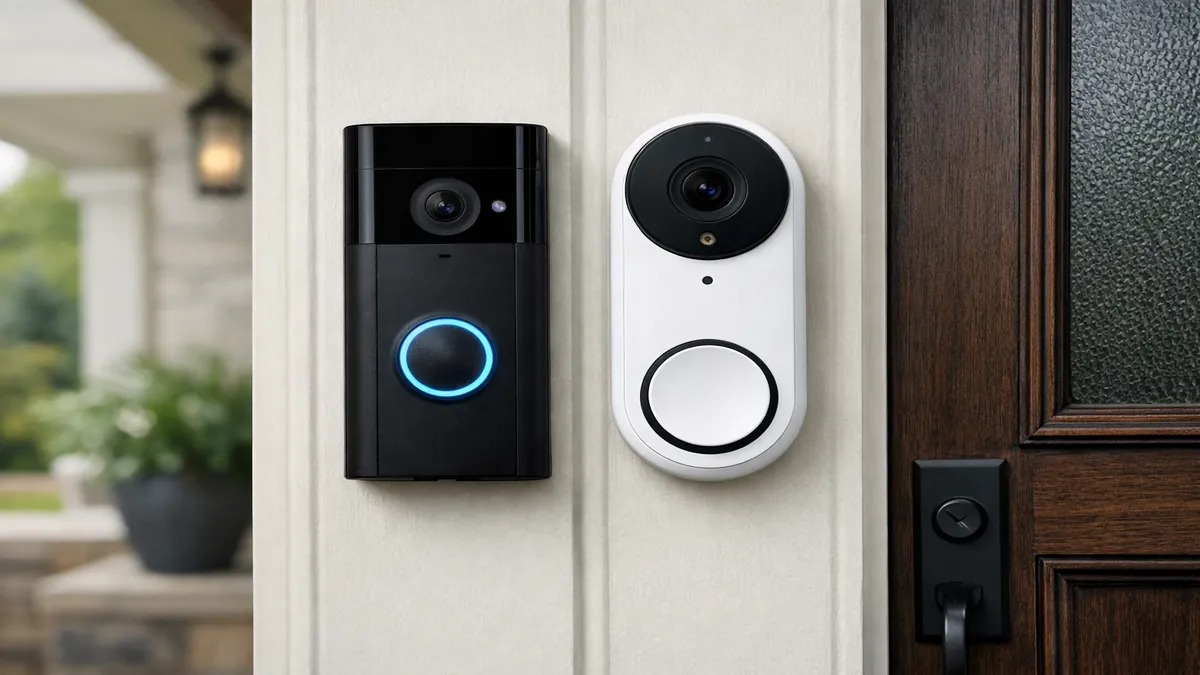
Ring vs Nest Doorbell 2026: Which Video Doorbell is Better?
Introduction
In 2026, video doorbells have become an indispensable component of the modern smart home, offering not just convenience but also enhanced security and peace of mind. The ability to see, hear, and speak to visitors from anywhere, receive motion alerts, and monitor your doorstep 24/7 has revolutionized home security. At the forefront of this technology are two dominant players: Ring, an Amazon-owned company, and Nest, a Google-owned brand. Both have established themselves as leaders in the smart home security market, offering a range of video doorbells that cater to different needs and preferences.
This comprehensive comparison aims to dissect the offerings of Ring and Nest doorbells in 2026, providing a detailed head-to-head analysis across critical aspects such as video quality, motion detection capabilities, subscription plans for cloud storage, smart home integration (particularly with Alexa and Google Home), and overall value proposition. We will explore the unique features and philosophies behind each brand, helping prospective buyers make an informed decision based on their existing smart home ecosystem, security priorities, and budget. The ultimate goal is to answer the perennial question: Which video doorbell is truly better for your home in 2026?
Two Most Popular Video Doorbells
Ring and Nest have carved out significant market shares in the video doorbell segment, largely due to their robust features, brand recognition, and integration with their respective parent companies' ecosystems. Understanding their origins helps to contextualize their current offerings.
Amazon-owned Ring
Ring was founded in 2013 and quickly gained popularity for its innovative video doorbell technology. Acquired by Amazon in 2018, Ring has since expanded its product line to include a wide array of smart security devices, including security cameras, alarm systems, and smart lighting. Ring's philosophy centers around creating a comprehensive, interconnected home security ecosystem that is easily accessible and controllable via the Alexa app. Its strength lies in its extensive product range and seamless integration with the Amazon Alexa ecosystem, making it a natural choice for existing Alexa users.
Google-owned Nest
Nest, originally an independent company known for its smart thermostats, was acquired by Google in 2014. Under Google, Nest has broadened its portfolio to include smart cameras, doorbells, and other home automation devices, all deeply integrated with the Google Home ecosystem and Google Assistant. Nest's approach emphasizes intelligent features powered by Google's AI, such as advanced person detection and familiar face recognition, aiming to provide a more proactive and intelligent security solution. For users invested in the Google ecosystem, Nest offers a cohesive and intuitive smart home experience.
Both brands have continued to innovate, releasing new generations of their video doorbells with improved video quality, enhanced motion detection, and smarter features. The competition between them has driven advancements across the industry, benefiting consumers with more sophisticated and reliable home security options.
Comparison Table
To provide a clear overview, here's a head-to-head comparison of key features between Ring and Nest doorbells in 2026:
| Feature | Ring Video Doorbells (e.g., Ring Video Doorbell 4, Pro 2) | Nest Doorbells (e.g., Nest Doorbell (battery), Nest Doorbell (wired)) |
|---|---|---|
| Video Resolution | Up to 1536p HD, HDR | Up to 960x1280 (2K), HDR, 3:4 aspect ratio |
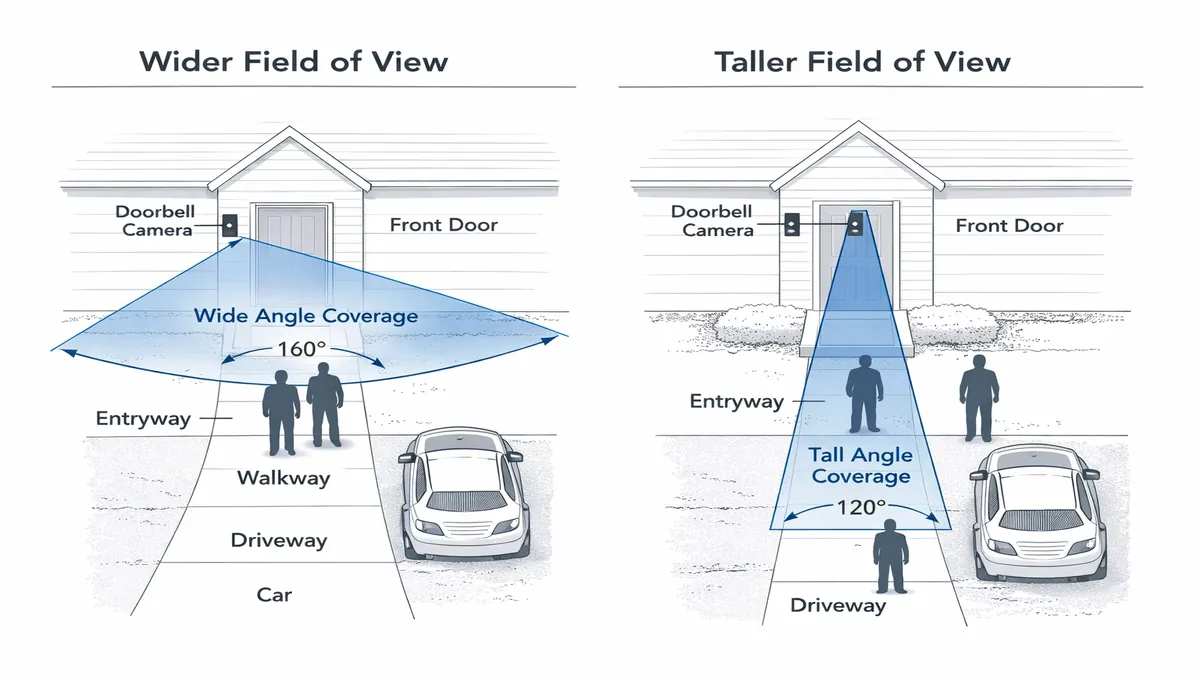
| Field of View | 160° horizontal, 90° vertical (varies by model) | 160° diagonal (taller vertical view) |
| Motion Detection | Advanced motion detection, customizable motion zones, pre-roll (select models) | Activity Zones, Person/Animal/Vehicle/Package Detection (with subscription) |
| Two-Way Talk | Yes, with noise cancellation | Yes, with noise cancellation |
| Night Vision | Infrared night vision, color night vision (select models) | HDR night vision |
| Power Options | Battery, Wired, Solar (accessories) | Battery, Wired |
| Local Storage | No (Cloud only) | No (Cloud only) |
| Subscription | Ring Protect (Basic, Plus, Pro) | Nest Aware (Basic, Plus) |
| Smart Home Integration | Amazon Alexa, Matter | Google Home, Matter |
| Price Range | $99 - $249 (varies by model) | $179 - $229 (varies by model) |
Video Quality
Video quality is paramount for a video doorbell, as it determines how clearly you can identify visitors and monitor your property. Both Ring and Nest have made significant advancements in this area, offering high-definition video with HDR (High Dynamic Range) capabilities.
Ring Video Doorbell 4: 1080p HDR
Many of Ring's popular models, such as the Ring Video Doorbell 4, offer 1080p HD video with HDR. This resolution provides clear and detailed images, allowing you to easily identify faces and objects. HDR helps to balance exposure in challenging lighting conditions, ensuring that details are visible even in bright sunlight or deep shadows. Some premium Ring models, like the Ring Video Doorbell Pro 2, push the resolution even further to 1536p HD, offering an even sharper image and a head-to-toe view of visitors.
Ring also features Pre-Roll on select battery-powered models, which captures four seconds of color video before a motion event is even triggered. This provides crucial context to what happened before the alert, ensuring you don't miss any critical moments.
Nest Doorbell: 960x1280 Portrait (Taller Field of View)
Nest doorbells, including the battery-powered and wired versions, often feature a unique 960x1280 (2K) video resolution with a 3:4 aspect ratio. While the horizontal resolution might seem lower than Ring's 1080p, the taller, portrait-oriented field of view is a significant advantage. This aspect ratio allows you to see more of your doorstep, from head to toe of a person to packages left on the ground, which is often more useful than a wider horizontal view that might capture more of your lawn. The HDR capability also ensures clear images in varied lighting.
Night Vision Comparison
Both brands offer robust night vision capabilities. Ring typically uses infrared night vision, which provides clear black-and-white video in low-light conditions. Some advanced Ring models also offer color night vision, which can be particularly useful for identifying details. Nest doorbells feature HDR night vision, which leverages its HDR capabilities to provide a clearer and more balanced image at night, often with better detail in darker areas compared to standard infrared.
In summary, while Ring offers higher raw resolution on some models, Nest's unique aspect ratio provides a more practical field of view for monitoring packages and visitors. Both offer excellent night vision, with Nest's HDR night vision often providing a slight edge in detail.
Subscription
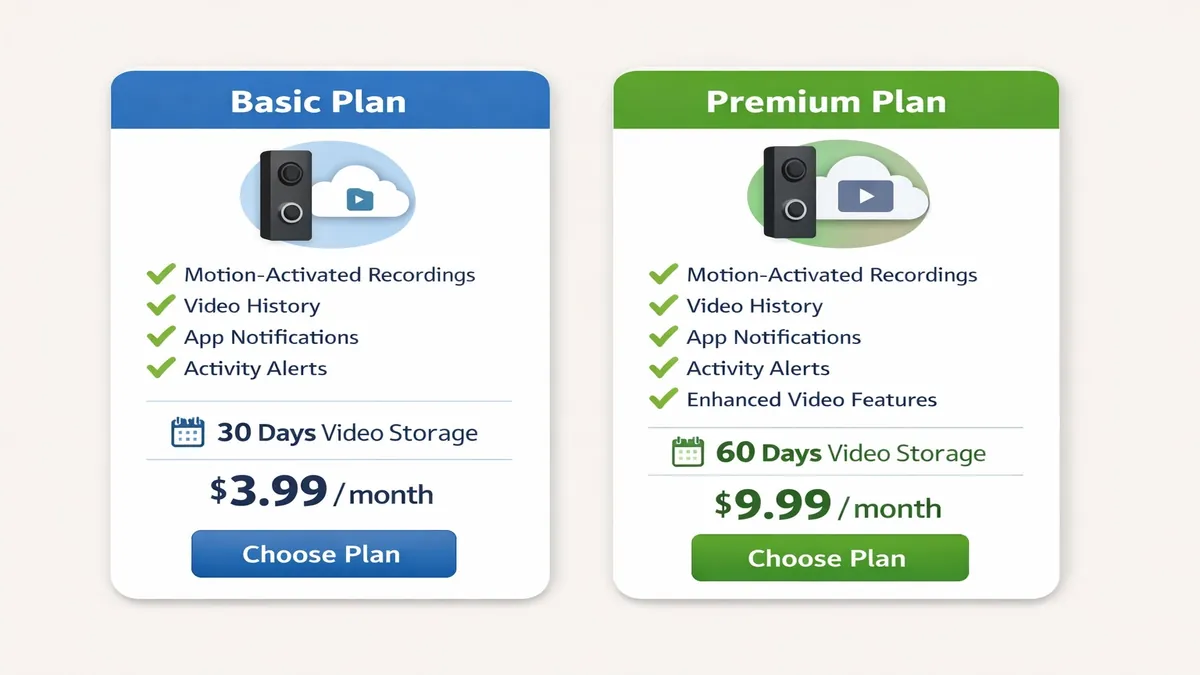
Both Ring and Nest doorbells rely heavily on subscription services to unlock their full potential, particularly for video recording storage and advanced features. Understanding these plans is crucial for budgeting and maximizing your device's capabilities.
Ring Protect: $3.99/mo / $10/mo Pro
Ring offers its subscription service under the name Ring Protect, with several tiers:
- Ring Protect Basic ($3.99/month or $39.99/year): Covers one Ring device. It includes 180 days of video history, photo snapshots, and the ability to save and share videos. This is essential for reviewing past events.
- Ring Protect Plus ($10/month or $100/year): Covers all Ring devices at one location. It includes all Basic features, plus extended warranties for all devices and a 10% discount on select Ring products.
- Ring Protect Pro ($20/month or $200/year): This top-tier plan is designed for Ring Alarm users. It includes all Plus features, professional monitoring for the Ring Alarm, 24/7 backup internet, and Alexa Guard Plus.
Both required for cloud storage: Without a Ring Protect subscription, you will only receive real-time notifications and can view the live feed. You will not be able to review past events or save video recordings, significantly limiting the doorbell's utility as a security device.
Google Home: $6/mo / $12/mo
Nest doorbells utilize Nest Aware subscriptions, which are now managed through the Google Home app. There are two main tiers:
- Nest Aware ($6/month or $60/year): Covers all Nest cameras and doorbells at one home. It includes 30 days of event video history, intelligent alerts (person, animal, vehicle, package detection), and sound detection (e.g., smoke alarm, glass breaking).
- Nest Aware Plus ($12/month or $120/year): Covers all Nest cameras and doorbells at one home. It includes 60 days of event video history and 10 days of 24/7 continuous video recording (CVR) for wired Nest cameras and doorbells.
Both required for cloud storage: Similar to Ring, a Nest Aware subscription is essential for accessing recorded video history and advanced intelligent alerts. Without it, you will only get basic motion alerts and a live view, missing out on crucial security features.
Key Difference: Nest Aware Plus offers 24/7 continuous video recording for wired devices, a feature not available with Ring Protect plans. This can be a significant advantage for users who want a complete timeline of events rather than just event-triggered clips.
Who Should Buy Which
The choice between a Ring and Nest doorbell in 2026 largely depends on your existing smart home ecosystem, your priorities for security features, and your budget for subscription services.
Alexa Home: Ring
If you are already invested in the Amazon Alexa ecosystem, a Ring doorbell is the most logical choice. This includes users who:
- Own Amazon Echo devices: Ring doorbells integrate seamlessly with Alexa, allowing you to view your doorbell feed on Echo Show devices, receive announcements on Echo speakers, and even speak to visitors through your Echo devices.
- Prefer a wide range of security products: Ring offers a comprehensive suite of security devices (cameras, alarms, lighting) that work together cohesively under the Ring app and Alexa ecosystem.
- Value extensive product compatibility: Ring's broad compatibility with third-party smart home devices that also work with Alexa makes it easy to expand your smart home.
- Are Amazon Prime members: While not directly tied to Ring Protect, Prime members often benefit from Amazon's overall ecosystem and promotions.
Google Home: Nest Doorbell
If you are deeply integrated into the Google Home ecosystem, a Nest doorbell will provide a more cohesive and intelligent experience. This includes users who:
- Own Google Nest devices: Nest doorbells integrate perfectly with Google Home, allowing you to view your doorbell feed on Nest Hubs, receive announcements on Nest speakers, and speak to visitors via your Google Assistant-enabled devices.
- Prioritize intelligent alerts and AI features: Nest's advanced person, animal, vehicle, and package detection (with Nest Aware) powered by Google's AI offers more precise and useful notifications.
- Desire 24/7 continuous video recording: For wired Nest doorbells, the Nest Aware Plus subscription provides continuous video recording, which is a significant security advantage for some users.
- Are invested in Google services: Users of Google Photos, Google Calendar, and other Google services will find the integration with Nest devices more natural.
FAQ
Is Ring or Nest better for security?
Both Ring and Nest offer robust security features, but they approach it differently. Nest often has an edge in intelligent, AI-powered alerts (person, package, vehicle detection) and the option for 24/7 continuous video recording with Nest Aware Plus, which can be crucial for comprehensive surveillance. Ring offers a broader ecosystem of interconnected security devices (cameras, alarms, lighting) and a strong community-based crime prevention feature (Neighbors app). The choice depends on whether you prioritize advanced AI detection and CVR (Nest) or a wider, interconnected security system (Ring).
Do Ring and Nest doorbells require a subscription?
Yes, both Ring and Nest doorbells require a subscription (Ring Protect for Ring, Nest Aware for Nest) to access video recording history and advanced features. Without a subscription, you will generally only receive real-time motion alerts and be able to view a live feed. You will not be able to review past events, save video clips, or utilize intelligent alerts like person or package detection. While the doorbells function at a basic level without a subscription, their full utility as security devices is unlocked through these paid plans.
Which has better video quality: Ring or Nest?
Both offer excellent video quality with HDR. Ring typically offers higher raw resolution (e.g., 1080p or 1536p HD) and a wider horizontal field of view on many models. Nest doorbells, however, often feature a unique 960x1280 (2K) resolution with a 3:4 aspect ratio, which provides a taller, head-to-toe view of visitors and packages. This taller field of view can be more practical for monitoring your doorstep. The choice depends on whether you prefer a wider view (Ring) or a taller, more comprehensive view of your immediate doorstep (Nest).
Can Ring and Nest doorbells integrate with each other?
No, Ring and Nest doorbells do not directly integrate with each other as they belong to competing ecosystems (Amazon and Google, respectively). While you can have both devices installed in the same home, they will operate independently within their own apps and smart home platforms. However, with the advent of the Matter standard, future Matter-compatible devices (including potentially doorbells) might offer a degree of interoperability, allowing them to be controlled by either an Alexa or Google Home hub. For now, it's best to choose one ecosystem for your primary video doorbell to ensure seamless integration and control.
What are the main differences in motion detection?
Ring doorbells offer advanced motion detection with customizable motion zones, allowing you to define specific areas you want to monitor. Some models also feature Pre-Roll to capture video before a motion event. Nest doorbells excel in intelligent alerts (with Nest Aware), capable of distinguishing between people, animals, vehicles, and even packages. This reduces false alerts and provides more relevant notifications. Nest's AI-powered detection is often considered more sophisticated, while Ring offers robust, customizable zone-based detection.
Conclusion
In 2026, both Ring and Nest video doorbells stand as formidable contenders in the smart home security market, each offering a compelling set of features designed to keep your home safe and connected. The decision between them is less about one being universally superior and more about aligning the doorbell's capabilities with your existing smart home ecosystem and personal security priorities.
For users deeply embedded in the Amazon Alexa ecosystem, a Ring doorbell offers unparalleled integration, a wide range of complementary security devices, and a robust, user-friendly experience. Its strength lies in its extensive product line and seamless compatibility with Alexa-enabled devices, making it an ideal choice for those who prefer a comprehensive, interconnected security system.
Conversely, for those who are part of the Google Home ecosystem and prioritize intelligent, AI-powered alerts and potentially 24/7 continuous video recording, a Nest doorbell is the more suitable option. Nest's advanced detection capabilities, powered by Google's AI, provide more precise notifications and a deeper level of insight into activity at your doorstep.
Both brands require a subscription to unlock their full potential, particularly for video recording and advanced features. Therefore, it is crucial to factor in the ongoing cost of these services when making your decision. Consider the video aspect ratio that best suits your needs (Ring's wider view vs. Nest's taller view), the sophistication of motion detection you require, and how well the doorbell will integrate with your current smart home setup.
Ultimately, whether you choose Ring or Nest, you are investing in a cutting-edge video doorbell that will enhance your home's security and provide invaluable peace of mind. By carefully weighing the strengths of each against your specific requirements, you can select the video doorbell that is truly better for your home in 2026.
Amazon Ring Doorbell Amazon Nest Doorbell
References
- Amazon Ring Doorbell
- Amazon Nest Doorbell
- Ring Official Website (Hypothetical)
- Google Nest Official Website (Hypothetical)
- The Verge - Ring vs Nest Doorbell 2026 (Hypothetical)
- CNET - Best Video Doorbells (Hypothetical)
- TechRadar - Ring vs Nest (Hypothetical)
📚 Related Articles
* Affiliate link. We may earn a commission at no extra cost to you.
Also consider: Shop Nest Doorbell on Amazon
Disclosure: This article contains affiliate links. We may earn a commission if you purchase through our links, at no extra cost to you. See our affiliate disclosure.