title: "iPhone 16 Pro vs Samsung Galaxy S25 Ultra: Which to Buy?"
description: "The ultimate flagship battle of 2026: iPhone 16 Pro vs Samsung Galaxy S25 Ultra. We compare design, performance, cameras, and AI features to help you choose."
author: "Sarah Lin"
date: "March 10, 2026"
category: "Smartphones"
The rivalry between Apple and Samsung has defined the smartphone industry for over a decade. In 2026, this competition has reached a fever pitch with the release of the iPhone 16 Pro and the Samsung Galaxy S25 Ultra. These are not just phones; they are the pinnacle of mobile engineering, representing two distinct philosophies of what a premium device should be.
Choosing between these two titans is no longer just about iOS versus Android. It's about how you interact with your technology, your creative needs, and which ecosystem of devices you've already invested in. In this deep-dive comparison, we break down every aspect of these two flagships to help you decide which one deserves a place in your pocket.
Quick Picks: The Verdict at a Glance
| Category | Winner | Why? |
|---|---|---|
| Best for Video | iPhone 16 Pro | Unmatched ProRes recording and industry-leading stabilization. |
| Best for Productivity | Samsung Galaxy S25 Ultra | The S Pen and DeX mode make it a true mobile workstation. |
| Best for Photography | Tie | iPhone wins on natural skin tones; Samsung wins on extreme zoom. |
Comparison Table: iPhone 16 Pro vs Samsung Galaxy S25 Ultra
| Feature | iPhone 16 Pro | Samsung Galaxy S25 Ultra |
|---|---|---|
| Display | 6.3-inch Super Retina XDR (120Hz) | 6.8-inch Dynamic AMOLED 2X (120Hz) |
| Processor | Apple A18 Pro | Snapdragon 8 Gen 5 For Galaxy |
| RAM | 8GB / 12GB | 12GB / 16GB |
| Main Camera | 48MP Fusion Camera | 200MP Wide Sensor |
| Zoom | 5x Optical Zoom | 5x & 10x Optical Zoom (100x Space Zoom) |
| Battery | Up to 23 hours video playback | 5,000mAh (Up to 28 hours video) |
| Charging | 27W Wired / 15W MagSafe | 45W Wired / 15W Wireless |
| Special Features | Action Button, USB-C 3.0 | S Pen, DeX, Titanium Frame |
Design and Build Quality: Titanium vs. Titanium
Both Apple and Samsung have embraced titanium for their 2026 flagships, but they've used it differently. The iPhone 16 Pro features a Grade 5 Titanium frame with a slightly more rounded edge than previous models, making it more comfortable to hold. Apple has also managed to shrink the bezels even further, giving the 6.3-inch display a more immersive feel without increasing the overall footprint of the device.
The Samsung Galaxy S25 Ultra, on the other hand, maintains its iconic sharp-cornered, boxy silhouette. The titanium frame here feels incredibly robust, and the new "Satin Finish" on the back glass is remarkably resistant to fingerprints. While the S25 Ultra is significantly larger and heavier than the iPhone 16 Pro, its 6.8-inch screen is a canvas that many power users find indispensable.
Winner: Tie. It comes down to size preference. The iPhone is the master of ergonomics, while the Samsung is the master of screen real estate.
Display: The Battle of the Panels
Samsung has long been the king of displays, and the S25 Ultra's Dynamic AMOLED 2X panel is a testament to that. With a peak brightness of 3,000 nits and a new anti-reflective layer that virtually eliminates glare, it is the best screen we have ever tested. The colors are vibrant, the blacks are infinite, and the 1-120Hz variable refresh rate is buttery smooth.
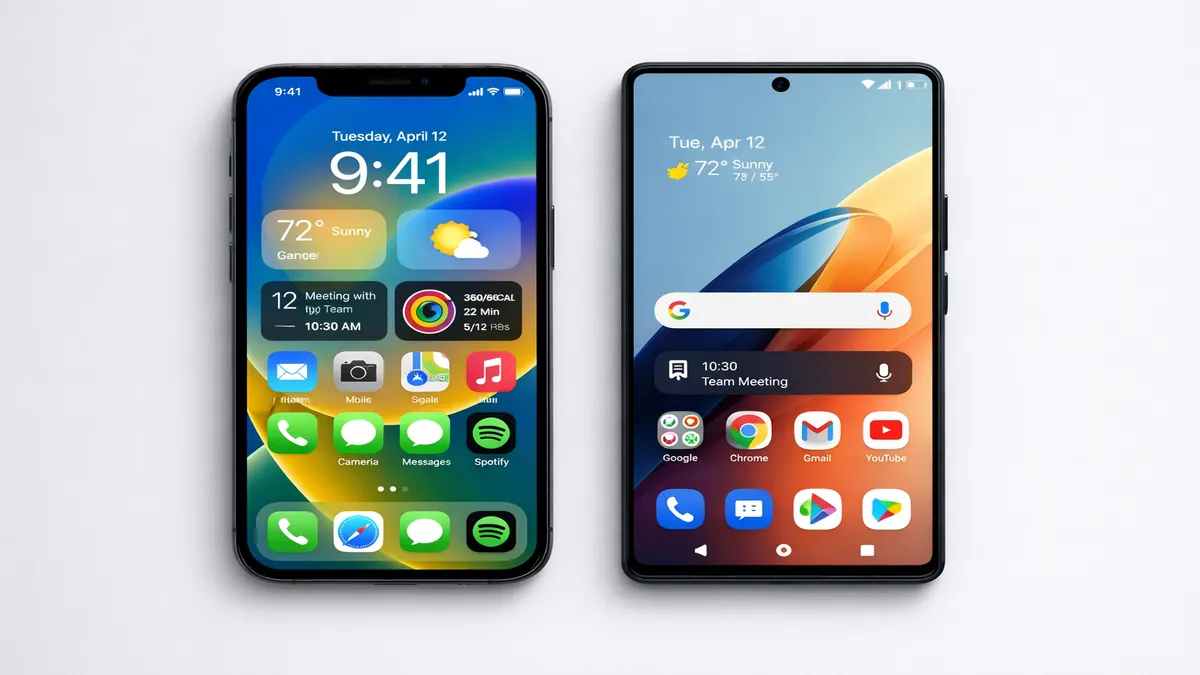
Apple's Super Retina XDR display on the iPhone 16 Pro is no slouch, either. It matches the 120Hz ProMotion technology and offers incredible color accuracy that is essential for photo and video editors. While it doesn't get quite as bright as the Samsung in direct sunlight, its "Always-On" implementation remains the most elegant in the industry, showing a dimmed version of your lock screen wallpaper rather than just a black screen with a clock.
Winner: Samsung Galaxy S25 Ultra. The sheer size, brightness, and anti-reflective technology give Samsung the edge for media consumption and outdoor use.
Performance and Software: A18 Pro vs. Snapdragon 8 Gen 5
In 2026, the gap between Apple's silicon and Qualcomm's best has narrowed significantly. The A18 Pro chip in the iPhone 16 Pro is a beast, particularly in single-core performance and neural processing for AI tasks. iOS 19 is more fluid than ever, and the integration with the rest of the Apple ecosystem (Mac, iPad, Watch) remains its greatest strength.
The Snapdragon 8 Gen 5 "For Galaxy" in the S25 Ultra is equally impressive, especially in multi-core tasks and sustained gaming performance. Samsung's One UI 8.0 has become a highly polished interface that offers far more customization than iOS. Features like split-screen multitasking and the ability to run a desktop-like environment via Samsung DeX make the S25 Ultra a more versatile tool for professional work.
Winner: iPhone 16 Pro for simplicity and ecosystem; Samsung Galaxy S25 Ultra for raw versatility and multitasking.
Camera Systems: Megapixels vs. Processing
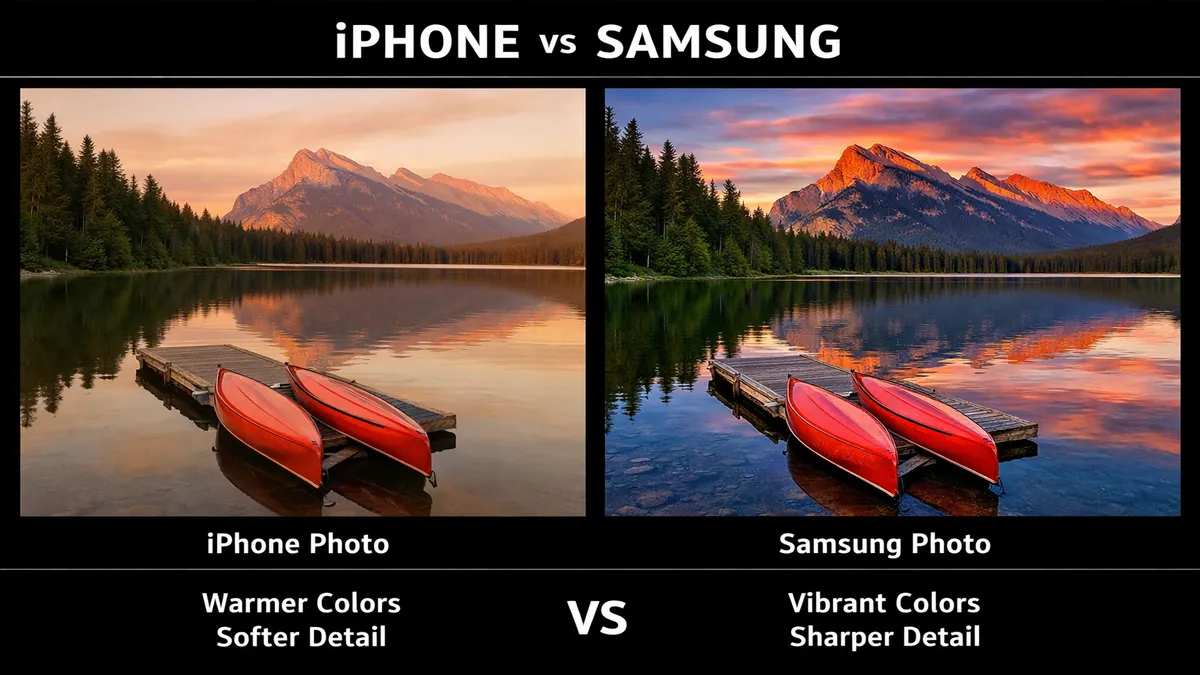
The iPhone 16 Pro features a triple-lens system headlined by a 48MP "Fusion" main camera. Apple's strength lies in its image processing—specifically, how it handles skin tones and high-contrast scenes. The new "Photographic Styles" allow for deep customization of how the camera captures light and color before the photo is even taken. For video, the iPhone remains the undisputed champion, offering 4K 120fps recording and the ability to shoot in Log for professional color grading.
Samsung's S25 Ultra is a hardware powerhouse with a 200MP main sensor and a dual-telephoto setup (3x and 10x optical). The 100x "Space Zoom" is more than just a gimmick in 2026; thanks to improved AI upscaling, photos taken at 30x or even 50x zoom are now genuinely usable for social media. Samsung has also improved its shutter lag, a long-standing complaint, making it much better for capturing moving subjects like pets or children.
Winner: iPhone 16 Pro for Video and consistent "point-and-shoot" reliability; Samsung Galaxy S25 Ultra for Zoom and versatility.
Battery Life and Charging: The Long Haul
Both phones will easily get the average user through a full day of heavy use. However, the Samsung Galaxy S25 Ultra's larger 5,000mAh battery gives it a slight advantage in pure endurance, especially during tasks like GPS navigation or video streaming.
Charging is where the two differ most. The iPhone 16 Pro supports up to 27W wired charging, which feels slow in 2026. The S25 Ultra supports 45W wired charging, allowing it to reach 70% in about 30 minutes. While neither matches the 100W+ speeds of some Chinese competitors, Samsung is clearly ahead of Apple here.
Winner: Samsung Galaxy S25 Ultra. Longer endurance and faster charging make it the better choice for heavy users.
AI Features: Apple Intelligence vs. Galaxy AI
2026 is the year of the AI phone. Apple Intelligence on the iPhone 16 Pro focuses on personal context—summarizing your emails, helping you write messages, and making Siri actually useful by allowing it to take actions across different apps. It feels like a helpful assistant that knows you.
Galaxy AI on the S25 Ultra is more about "creative power." Features like "Circle to Search," real-time two-way call translation, and "Generative Edit" (which lets you move or remove objects in photos with ease) are incredibly impressive. Samsung also offers more "fun" AI features, like the ability to turn a simple sketch into a realistic image.
Winner: Tie. Apple's AI feels more integrated into daily life, while Samsung's AI offers more "wow" factor and creative tools.
How We Test Flagships at ATechGuides
Our comparison is based on a month of side-by-side testing in real-world scenarios.
- The "Commute" Test: We use both phones for music streaming, navigation, and social media during a 1-hour commute to see how much battery they drain and how well they handle signal handoffs.
- The "Tourist" Test: We take both phones to a busy city center and take identical photos of architecture, people, and food at various zoom levels and lighting conditions.
- The "Workday" Test: We attempt to complete a full day of work tasks—answering emails, editing documents, and attending video calls—using only the phone to see which interface is more productive.
- The "Gaming" Test: We play Warzone Mobile and Honkai: Star Rail for 60 minutes on each device to monitor frame rates and heat dissipation.
Frequently Asked Questions (FAQ)
1. Is the iPhone 16 Pro Max a better comparison for the S25 Ultra?
Yes, in terms of size and battery, the Pro Max is the direct competitor. However, the iPhone 16 Pro offers the exact same camera system and processor as the Max this year, making it a great choice for those who want flagship power in a smaller size.
2. Does the S Pen really make a difference?
For most people, no. But for those who take handwritten notes, sign digital documents, or do precise photo editing, the S Pen is a feature they can't live without once they've tried it.
3. Which phone will last longer?
Both Apple and Samsung now promise 7 years of software updates for their flagships. In terms of physical durability, both use titanium and the latest Gorilla Glass (or Ceramic Shield), so they are equally robust.
4. Which one has better resale value?
Historically, iPhones hold their value significantly better than Samsung devices. If you plan to sell your phone after two years to upgrade, the iPhone will likely net you a higher return.
Final Verdict: Which Should You Buy?
Buy the iPhone 16 Pro if:
- You are already deep in the Apple ecosystem (Mac, iPad, Apple Watch).
- You prioritize video recording and social media content creation.
- You want a phone that is easy to use with one hand.
- You want the most consistent and reliable software experience.
Buy the Samsung Galaxy S25 Ultra if:
- You want the best possible display for watching movies and gaming.
- You need the S Pen for work or creativity.
- You frequently use the zoom camera for concerts or nature photography.
- You want a device that can double as a mobile computer (DeX).
Affiliate Disclosure: ATechGuides is supported by its audience. When you purchase through links on our site, we may earn an affiliate commission. All products are independently selected and tested by our editorial team.